
Category: Style

  • An Honest Opinion: Are Expensive Cashmere Sweaters Worth It?

    An Honest Opinion: Are Expensive Cashmere Sweaters Worth It?

    An Honest Opinion: Are Expensive Cashmere Sweaters Worth It?

    I’ve been there. Standing in a beautifully lit store, fingers tracing the impossibly soft fabric of a sweater. I glance at the tag, and my breath catches. That can’t be right. Three digits—sometimes starting with a number I’m not entirely comfortable with—for a single piece of clothing. My mind immediately starts doing the math: that’s a week of groceries, a couple of tanks of gas, a significant chunk of the kids’ activity fees. I fold it carefully, place it back on the polished wooden table, and walk away with a sigh.

    The allure of a 100% cashmere sweater is powerful, but the price tag can feel like a barrier to entry. For years, I preached the gospel of ‘quality over quantity,’ a philosophy I still stand by. But even I had to ask myself: is this particular luxury staple truly a worthwhile investment, or is it just a status symbol with a high cost of ownership? It’s one of the most common questions I get, so I decided it was time to really dive in. I’m pulling back the curtain on my own experience, analyzing the cost-per-wear, the essential care routines, and how it stacks up against more affordable options to give you my final, honest verdict.

    First, What Makes Cashmere So Special (and So Expensive)?

    Before we can talk about value, we have to understand what we’re paying for. Cashmere isn’t just wool from a fancy sheep. It’s a specific fiber from the fine, downy undercoat of cashmere goats. These goats live in harsh, cold climates, and this super-soft layer is what keeps them warm.

    Here’s the kicker: the fibers are harvested by hand-combing the goats during their natural shedding season in the spring. A single goat produces only a few ounces of this precious fiber each year—sometimes just enough for a scarf. It can take the fleece of two to four goats to make a single sweater. When you factor in the delicate harvesting process, the cleaning, the sorting of the fibers by quality (longer, finer fibers are more expensive and less prone to pilling), and the expert spinning and knitting, that price tag starts to make a little more sense.

    The result is a fabric that’s up to eight times warmer than sheep’s wool, yet incredibly lightweight and breathable. It doesn’t have the itch-factor of traditional wool, and when you slip it on, it feels less like clothing and more like a gentle, comforting hug. It’s the very definition of everyday luxury.

    Let’s Talk Numbers: The Power of Cost-Per-Wear

    As a former corporate strategist, I can’t help but look at things through a practical, analytical lens. My approach to building an investment wardrobe is no different. The initial price of an item is only one part of the equation. The real story is in the cost-per-wear (CPW).

    CPW is simple: Total Cost of Item ÷ Number of Times Worn = Cost-Per-Wear.

    Let’s imagine a classic, high-quality, 100% cashmere crewneck sweater that costs $350. It’s an intimidating number, I know. But let’s be realistic about how you’d wear it. It’s a timeless piece you could wear for work-from-home video calls, weekend errands, and cozy evenings in. If you wear it just 15 times between fall and spring, that’s $23.33 per wear in the first year.

    But a well-cared-for cashmere sweater isn’t a one-season wonder. It’s a lifetime piece. Let’s say you wear it 15 times a year for five years (a very conservative estimate). That’s 75 wears.

    $350 ÷ 75 wears = $4.67 per wear.

    Now, compare that to a trendy, $60 acrylic sweater from a fast-fashion brand. It looks great for a few wears, but it starts pilling and losing its shape after a handful of washes. Maybe you get one season—15 wears—out of it before it looks tired. That’s a CPW of $4.00. It seems cheaper, but you have to replace it every single year. Over five years, you’d spend $300 on subpar sweaters that never felt as good or looked as elegant as the single cashmere piece. Suddenly, the investment piece doesn’t just feel better—it makes financial sense, too.

    The Catch: An Investment Requires Maintenance

    Here’s the part where I get brutally honest. A cashmere sweater is not a “buy it and forget it” item. You can’t just toss it in the hamper with your kids’ soccer jerseys and hope for the best. That low cost-per-wear I just calculated? It’s entirely dependent on you treating this garment with the respect it deserves. The good news is, it’s easier than you think.

    My Tried-and-True Cashmere Care Routine

    • Wash Sparingly: Cashmere is naturally breathable and antibacterial. You don’t need to wash it after every wear. I typically wash my sweaters every 4-5 wears, unless something gets spilled on them.
    • Hand-Wash is Best: It sounds daunting, but it’s a 15-minute task. Fill a clean basin with cool water and a small amount of a gentle, pH-neutral detergent made for wool and cashmere. Submerge the sweater, gently squeeze the suds through it (never wring or twist!), and let it soak for 10 minutes.
    • Rinse and Reshape: Drain the soapy water and rinse with cool, clean water until the suds are gone. Gently squeeze out the excess water. Place the sweater on a thick, clean towel, roll it up like a jelly roll, and press firmly to absorb more water.
    • Lay Flat to Dry: Unroll the sweater and lay it flat on a fresh, dry towel or a mesh drying rack, away from direct sunlight or heat. Reshape it to its original dimensions. Never, ever hang a wet cashmere sweater—the weight of the water will stretch it out permanently.
    • Storage is Key: In the off-season, make sure your sweaters are clean, and then fold them neatly. Store them in a breathable garment bag with some cedar blocks or lavender sachets to deter moths.

    A Note on Pilling (Because It Happens!)

    I remember the first time I noticed tiny little balls of fluff forming on the underarms of my first “real” cashmere sweater. I panicked. Did I buy a dud? Did I ruin it? The truth is, pilling is a natural characteristic of fine animal fibers. It’s caused by friction—where your arms rub against your body, or where your purse strap sits. Even the most expensive cashmere will pill a bit, especially when it’s new.

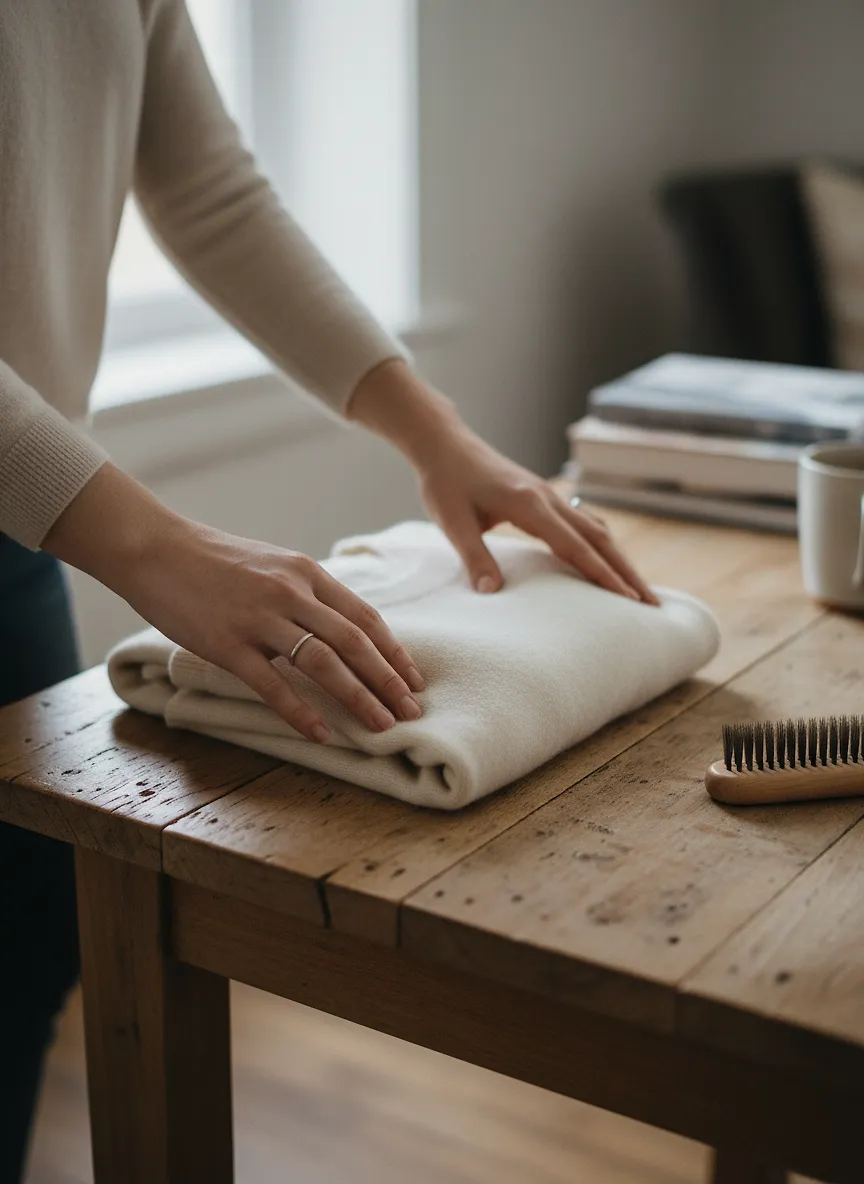
    The solution isn’t to stop wearing it; it’s to manage it. Invest in a small, inexpensive cashmere comb or a fabric shaver. Lay the sweater on a flat surface and gently glide the comb over the pilled areas. It takes two minutes and leaves your sweater looking brand new. It’s a small, almost meditative ritual that’s part of the ownership experience.

    The Contenders: How Do Cheaper Alternatives Stack Up?

    Okay, so maybe a $350 sweater just isn’t in the cards right now. I get it. What are the other options, and are they any good?

    Cashmere Blends

    You’ll often see sweaters labeled “cashmere blend,” which usually means a small percentage of cashmere (sometimes as low as 5-10%) is blended with wool, silk, or synthetic fibers like nylon. These are more affordable, but you lose some of that signature cashmere magic. They won’t be as soft or as warm, and blends with synthetics can be more prone to stubborn pilling and won’t be as breathable.

    Merino Wool

    In my opinion, high-quality merino wool is the absolute best alternative to cashmere. It comes from merino sheep and has many of the same amazing properties: it’s soft (though not *quite* as cloud-like as cashmere), it’s excellent at regulating body temperature, it’s breathable, and it’s naturally odor-resistant. It’s also more durable and generally less expensive. A great merino wool sweater is a fantastic investment and a cornerstone of my guide to building a minimalist loungewear capsule wardrobe. It’s the perfect intersection of comfort, quality, and value.

    Recycled Cashmere

    A growing number of sustainable brands are using recycled cashmere, made from post-consumer yarn that is sorted, shredded, and re-spun. This is a wonderful, eco-friendly option that reduces waste. The fibers are shorter, so it may not feel quite as buttery soft as virgin cashmere, but it’s a purchase you can feel fantastic about.

    My Final Verdict: So, Are They Worth It?

    After years of owning, wearing, and caring for cashmere, my answer is a resounding… yes, but with a few important conditions.

    An expensive cashmere sweater is worth it if:

    1. You choose a timeless style and color. Don’t drop a fortune on a trendy, of-the-moment piece. Opt for a classic crewneck, v-neck, or cardigan in a neutral color (like camel, navy, grey, or cream) that will work with your wardrobe for the next decade.
    2. You are committed to the care. If you know you’re the type to shrink things in the wash or can’t be bothered with hand-washing, be honest with yourself. In that case, a high-quality merino wool sweater that can handle a gentle machine cycle might be a smarter choice for your lifestyle.
    3. It fits your budget without causing stress. A piece of clothing should bring you joy, not financial anxiety. If you have to save up for it, great! But don’t go into debt for a sweater. It’s a luxury, not a necessity.

    For me, Avery, my favorite cashmere sweater is more than just an item of clothing. It’s the piece I reach for on stressful WFH days when I need to feel put-together but also deeply comfortable. It’s what I throw on over a t-shirt for a chilly evening walk with my family. The act of slipping it on has become one of my favorite practical self-care rituals for overwhelmed working moms; it’s a small, tangible way to be kind to myself. It’s a quiet luxury that feels like a reward for the hard work of balancing a business and a family.

    Investing in that first piece felt like a big step, but years later, it still looks as beautiful as the day I bought it. It has become a trusted friend in my closet. And when I think about the hundreds of times I’ve worn it, the feeling of comfort it’s given me, and the fact that I’ll still be wearing it five years from now—well, the cost-per-wear starts to feel priceless.

    Stay cozy,

    Avery

  • My Guide to Building a Minimalist Loungewear Capsule Wardrobe

    My Guide to Building a Minimalist Loungewear Capsule Wardrobe

    My Guide to Building a Minimalist Loungewear Capsule Wardrobe

    If you had told my former, corporate-strategist self—the one who lived in structured blazers and heels—that my future uniform would consist of joggers and sweatshirts, I would have laughed. Back then, “loungewear” was a ratty old t-shirt and sweats I wouldn’t dare wear outside the house. Comfort was something reserved for the sliver of time between walking in the door and collapsing into bed. But oh, how things have changed.

    Now, as a founder and a mom, my life is a beautiful, chaotic blend of work, family, and stolen moments of calm. My office is my living room, my boardroom is my kitchen table, and my schedule is… flexible, to put it mildly. I live in loungewear. But I’ve learned a powerful lesson along the way: living in loungewear doesn’t mean you have to feel sloppy or sacrifice style. In fact, it can be the exact opposite.

    That’s where the magic of a minimalist loungewear capsule wardrobe comes in. It’s a concept that has completely transformed my daily routine, simplifying my mornings and making me feel put-together even on the most hectic days. It’s not about having less; it’s about having the *right* things. Today, I’m pulling back the curtain on my personal philosophy and sharing exactly how you can build your own versatile, high-quality loungewear capsule that takes you from your first sip of coffee to your evening wind-down with effortless style.


    What is a Loungewear Capsule Wardrobe, Really?

    Let’s clear something up. This isn’t just a pile of sweatpants. A loungewear capsule is a thoughtfully curated collection of about 10-12 high-quality, versatile pieces that you absolutely love to wear. They all mix and match seamlessly, they feel incredible against your skin, and—this is key—they look polished enough to handle whatever the day throws at you.

    Think of it as your ‘work-from-home style’ uniform, but one that’s rooted in comfort. For me, Avery Sinclair, embracing this approach was a game-changer. It eliminated the daily “what do I wear?” debate, freeing up precious mental energy for my business and my family. Instead of a closet overflowing with mediocre options, I have a small selection of pieces I genuinely look forward to wearing. It’s about investing in yourself and the quiet confidence that comes from feeling good in what you’re wearing, even when you’re just at home.

    The Core Principles: My Loungewear Philosophy

    Before you start adding to your cart, it’s important to have a philosophy. Mine is built on three simple, non-negotiable principles. Getting these right is the secret to a capsule that truly works.

    1. Fabric is Everything

    If a piece doesn’t feel amazing, you won’t want to wear it. It’s that simple. I prioritize natural, breathable fabrics that are soft, durable, and kind to your skin. This is the biggest differentiator between fast-fashion loungewear and true, high-quality loungewear. My favorites are:

    • Cotton (Organic, Pima, or Supima): It’s the gold standard for a reason. It’s breathable, soft, and gets even better with age. Perfect for your core tees and sweatshirts.
    • Cashmere & Merino Wool: The ultimate in quiet luxury. These fabrics are incredibly warm yet breathable, making them perfect for cozy sweaters or even elevated joggers. They are an investment, but a good cashmere piece will last you for years with proper care.
    • Modal, Tencel, and Lyocell: These plant-based fabrics are known for their silky-smooth feel and beautiful drape. They feel incredibly gentle on the skin and are often produced in eco-friendly ways. I love them for wide-leg pants and layering tanks.

    What I avoid? Cheap synthetics like polyester and acrylic in my base layers. They often trap sweat, pill after a few washes, and just don’t provide that same sense of everyday luxury.

    2. The Power of a Neutral Palette

    I love a good pop of color, but the foundation of my capsule is built on versatile neutrals. Why? Because it guarantees that every single top works with every single bottom. There’s no guesswork involved. My go-to shades are heather grey, oatmeal, black, navy, and cream. They are timeless, calming, and effortlessly chic. You can always add personality with a single piece in a muted jewel tone or a soft pastel, but keeping the core neutral is what makes the capsule system foolproof.

    3. Fit and Silhouette Matter

    This is what elevates loungewear from “pajamas” to a legitimate “outfit.” Loungewear doesn’t have to mean baggy and shapeless. Look for intentional silhouettes. A jogger that tapers nicely at the ankle. A crewneck sweatshirt with a classic, not-too-boxy fit. A long cardigan that drapes elegantly instead of just hanging. These details make all the difference, creating a clean, streamlined look that feels intentional and put-together—even if you’re just moving from the couch to the kitchen.

    Building Your 10-Piece Minimalist Loungewear Capsule

    Ready to build? Here is my personal, tried-and-true 10-piece list. Think of this as a template you can adapt to your own lifestyle and preferences. The goal is maximum comfort and versatility.

    The Tops (5 Pieces)

    1. The Perfect T-Shirt: A high-quality, long-sleeve or short-sleeve tee in a neutral like white, grey, or black. Look for Pima cotton for an ultra-soft feel.
    2. A Classic Crewneck Sweatshirt: The workhorse of my wardrobe. Choose a classic fit in a versatile color like heather grey. It’s perfect on its own or for layering.
    3. A Luxe Knit Sweater: This is your “elevated” piece. A beautifully made sweater in cashmere, merino wool, or alpaca in a color like oatmeal or camel instantly makes any lounge pant look chic.
    4. A Soft Layering Tank or Camisole: A simple ribbed tank or a silky modal camisole is perfect for wearing under sweaters and cardigans or on its own when it’s warmer.
    5. A Long, Open-Front Cardigan: I call this the “Zoom-call-ready” piece. Throw it over anything (even a simple tank) and you instantly look more polished. Choose one that hits mid-thigh or knee-length for a sophisticated silhouette.

    The Bottoms (3 Pieces)

    1. High-Quality Joggers: Forget the bulky fleece of your college days. Modern joggers are slim, tailored, and made from fabrics like French terry cotton or even cashmere blends. A pair in black or charcoal is a must.
    2. Wide-Leg Lounge Pants: The epitome of comfortable elegance. A pair of wide-leg pants in a drapey fabric like modal or Tencel feels like a dream and looks incredibly chic with a simple tee or fitted sweater.
    3. Versatile Leggings: A good pair of black leggings is non-negotiable. Find a pair with a comfortable high waist and a soft, opaque fabric that can take you from your desk to a yoga mat to a walk around the block.

    The “One & Done” Pieces (2 Pieces)

    1. A Knit Jumpsuit or “House Dress”: For days when you don’t want to think about pairing a top and a bottom. A soft, comfortable knit dress or jumpsuit is a complete outfit in one easy step.
    2. A Beautiful Robe: The ultimate piece for bookending your day. I love a simple, long robe in waffle-knit cotton or linen for wrapping up in after a shower or while enjoying my morning coffee.
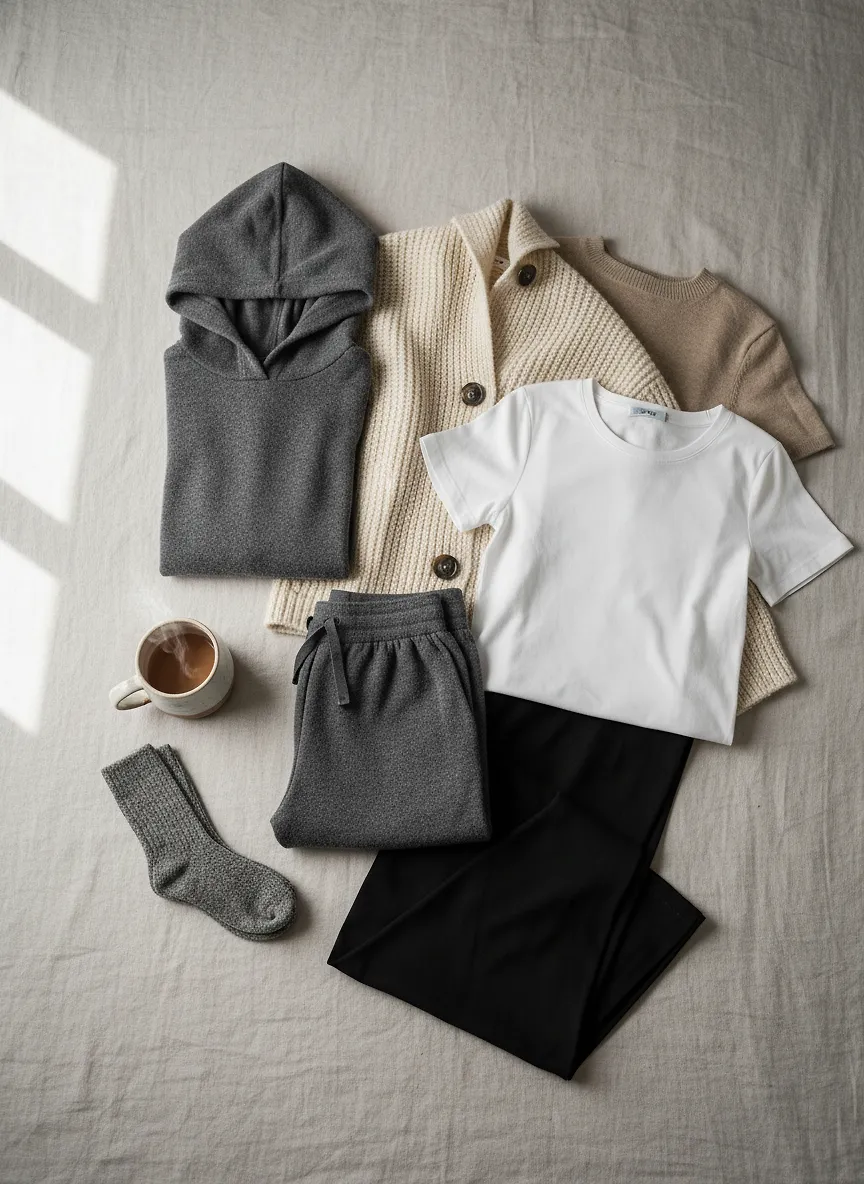
    My go-to pieces for effortless, everyday comfort.

    Making It Work: How I Mix and Match My Capsule

    Okay, so you have the pieces. How does it all come together in real life? Here are a few daily scenarios from my own life:

    I remember one frantic Tuesday when I had a last-minute video call with a potential partner. I was in my favorite grey joggers and crewneck. I just threw on my long oatmeal cardigan, added a pair of simple gold hoops, and sat down at my desk. No one was the wiser, and I felt completely comfortable and confident. That’s the magic of a good capsule.

    • Morning Coffee & Emails: I’ll start the day in the wide-leg lounge pants and the soft layering tank, with my long robe thrown over top while I make coffee. Once I sit down to work, I’ll swap the robe for the long cardigan. It feels like I’m wearing pajamas, but I look ready for a video call.
    • Mid-Day Hustle & A Quick Walk: For focused work time, I love the leggings and the classic crewneck sweatshirt. It’s a no-fuss combo that’s comfortable for hours at my desk. If I need to clear my head, I can just slip on a pair of sneakers and head out the door without a second thought.
    • School Pickup & Errands: The black joggers paired with the luxe cashmere sweater is my go-to. It’s an outfit that feels incredibly comfortable but looks instantly polished. Add some clean white sneakers and a simple tote bag, and I feel put-together running around town.
    • Evening Wind-Down: To signal to my brain that the workday is over, I’ll often change into my knit “house dress.” It’s just one piece, feels amazing, and is perfect for making dinner, reading with the kids, and finally relaxing on the couch.

    A Final Thought on Building with Intention

    Creating a minimalist loungewear capsule wardrobe isn’t about restriction; it’s about freedom. It’s the freedom from decision fatigue, the freedom from a cluttered closet, and the freedom to feel comfortable and confident in your own skin, in your own home.

    Don’t feel pressured to build this overnight. Start by auditing what you already have. Then, invest in one or two high-quality pieces that you know you’ll love and wear constantly. Over time, you’ll build a collection that truly serves you, simplifying your life and bringing a little bit of everyday luxury to your routine. Because you deserve to feel good, from the inside out.

    Here’s to finding comfort and style in the everyday hustle.

    With warmth,
    Avery