Author: Avery Sinclair

  • Finding My ‘And’: My Unfiltered Journey to Work-Life Balance

    Finding My ‘And’: My Unfiltered Journey to Work-Life Balance

    Finding My ‘And’: My Unfiltered Journey to Work-Life Balance

    The laptop was open to a half-finished business plan, my coffee was cold, and a tiny, sticky hand was methodically smearing yogurt onto my favorite pair of leggings. In the background, my email notifications were pinging with the frantic energy of a pinball machine. I remember sinking onto the floor, surrounded by the beautiful, chaotic mess of my life, and thinking, “This is it. This is what failing at everything feels like.”

    For years, I’d been on a quest for the holy grail of modern adulthood: work-life balance. I pictured it as a perfectly even scale, with a serene, productive workday on one side and a joyful, present home life on the other. But my reality was less a scale and more a wobbly, out-of-control seesaw, with me usually getting flung off the end. Every time I leaned into my work, guilt about my family crept in. Every time I fully unplugged to be with my kids, a nagging anxiety about my business would bubble up. Sound familiar?

    I was convinced I was doing something wrong. That somewhere out there, other entrepreneur moms had it all figured out. But the more I chased this elusive balance, the more exhausted and fragmented I became. This is the story of how I finally stopped chasing a myth and started building a reality that actually worked—by embracing the ‘and’.

    The Myth of the Perfectly Balanced Scale

    Before launching this blog, my life was in corporate strategy. It was a world of spreadsheets, five-year plans, and clear, measurable outcomes. I loved the order of it all. When I became a mother and then a founder, I tried to apply that same logic to my life. I color-coded calendars. I set rigid time blocks. I was determined to compartmentalize “Work Avery” from “Mom Avery.”

    The problem with the balance metaphor is that it sets up an inherent conflict. It implies that work and life are two separate, competing forces. For one to get more of your attention, the other must get less. It’s a zero-sum game, and in my experience, it’s a game you can never really win. You just end up feeling perpetually guilty, like you’re short-changing one part of your life to pay for the other.

    I’ll never forget the day I was on a “critically important” video call to close a partnership deal. My toddler, who had been napping, woke up with a fever and was crying for me just outside my office door. I could hear his little voice calling “Mama!” while I was trying to smile and nod and talk about Q3 projections. I felt my heart split in two. In that moment, I wasn’t a successful founder or a good mom. I just felt like a failure at both, stretched so thin I was transparent.

    Shifting from ‘Or’ to ‘And’

    The big shift for me didn’t come from a new planner or a productivity hack. It came late one night, after a particularly chaotic day, when I finally just… surrendered. I stopped trying to force my life into neat little boxes. I stopped seeing my roles as a founder *or* a mother.

    And I started to wonder: What if it’s not about balance, but integration? What if I could be a founder *and* a mother, at the same time, in the same breath? What if the skills I was learning from one role—patience, multitasking, crisis management (hello, toddler tantrums!)—actually made me better at the other?

    This was the beginning of my journey to redefining success. Success was no longer about a clean separation of church and state, work and home. Success became about creating a blended, cohesive life that felt whole and authentic, even if it looked a little messy from the outside. It was about finding the ‘and’. I am a dedicated entrepreneur *and* a present parent. My work is a part of my life, *and* my life enriches my work. It’s a subtle shift in language, but it changed everything.

    Practical Integration: How I Started Living in the ‘And’

    Of course, a mindset shift is only half the battle. I had to put it into practice. This wasn’t about finding one magic solution, but about a series of small, intentional changes that, over time, created a life that felt less like a struggle and more like a dance.

    Redefining the ‘Workday’ with Energy Blocking

    The 9-to-5 workday was designed for a world that doesn’t exist for most of us anymore. Instead of forcing myself into that rigid structure, I started listening to my own energy rhythms. I’m a morning person, so I now protect my early hours (from about 6 to 8:30 a.m.) for deep, focused work like writing and strategy. My kids are still asleep, the house is quiet, and my mind is sharp. Then, I can be fully present for the morning school-run chaos.

    My afternoons are for more collaborative tasks—emails, meetings, calls—that I can do even when my energy is a bit lower. And I build in a hard stop around 4 p.m. to be there for my kids after school, no apologies. Some days, I’ll hop back online for an hour after they’re in bed. Other days, I won’t. The key is flexibility and tuning into my energy, not the clock.

    Embracing the ‘Good Enough’ Philosophy

    As a former corporate strategist and a recovering perfectionist, this was the hardest one for me. But I realized that striving for perfection in every area was the fastest route to burnout. Now, I live by the “good enough” philosophy. The house doesn’t need to be immaculate; it needs to be a home. Dinner doesn’t have to be a gourmet meal; it just needs to be nutritious (and sometimes, that means breakfast for dinner or a healthy delivery service).

    Letting go of the need to do everything perfectly freed up so much mental and emotional energy. This shift was a huge part of my journey toward discovering practical self-care rituals for overwhelmed working moms. It’s about choosing what truly matters and letting the rest be ‘good enough’.

    Creating Boundaries with Simple Rituals

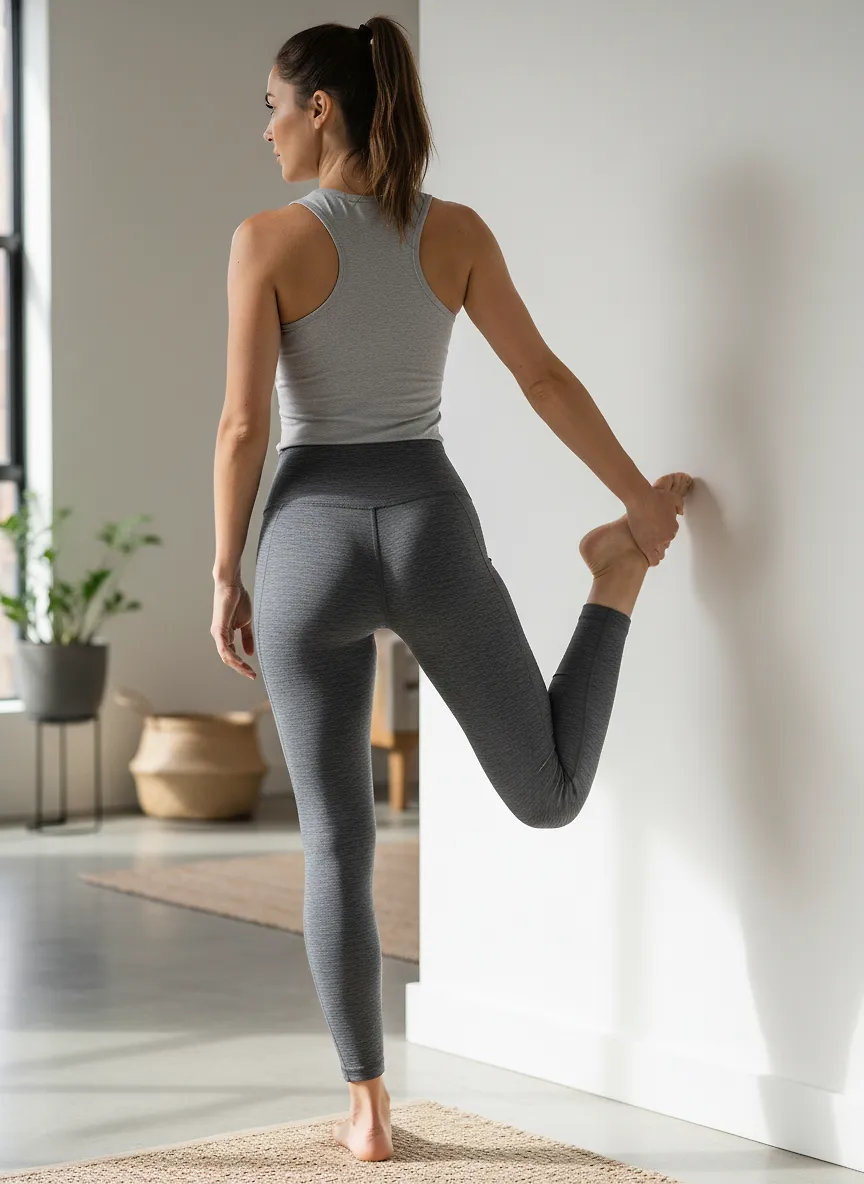
    When your office is ten steps from your living room, boundaries can feel impossible. But I found that small rituals can make a huge difference in signaling to my brain when the workday is beginning and, more importantly, when it’s ending. In the morning, it’s making a pour-over coffee and changing out of my pajamas into a comfortable but put-together outfit—usually a great pair of leggings and a cozy sweater. It’s a small act that says, “I am starting my workday.”

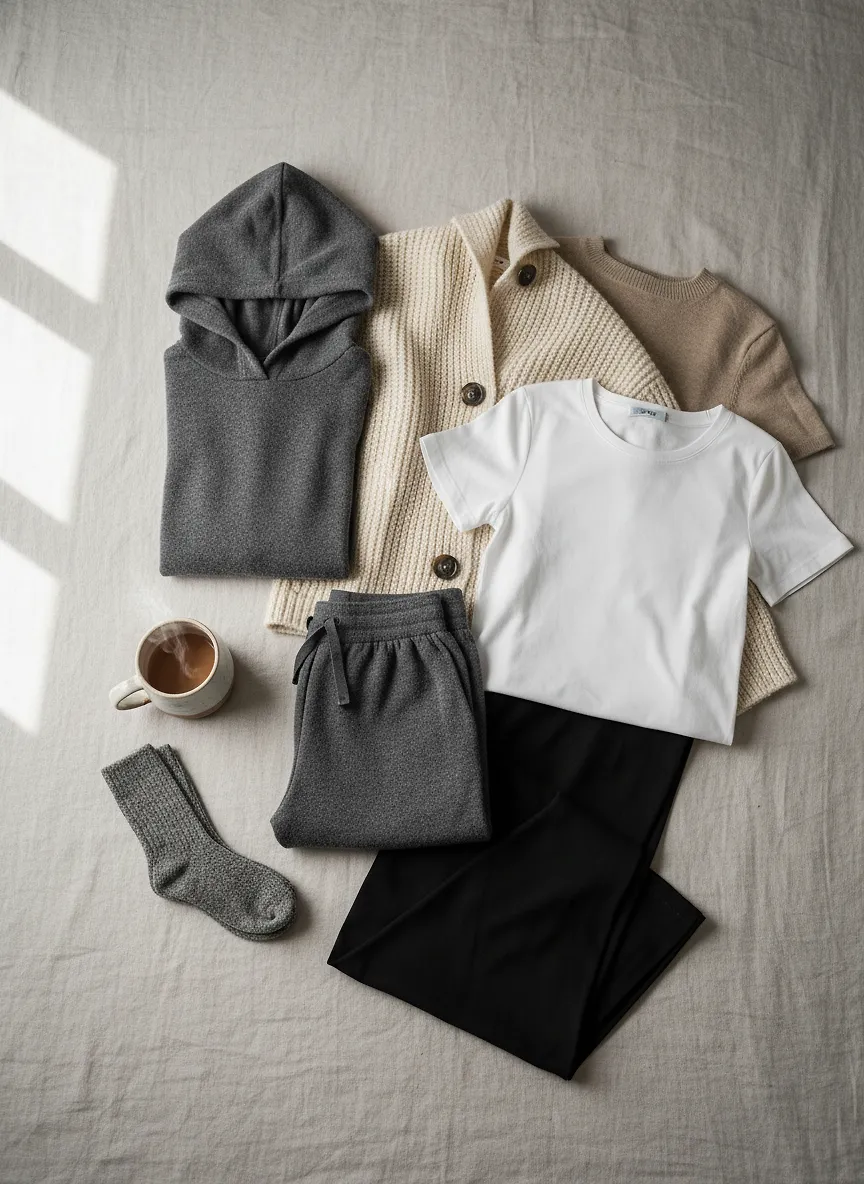
    The end-of-day ritual is even more crucial. I close my laptop—I don’t just put it to sleep. I tidy my desk. And I change my clothes again, usually into my comfiest sweats or loungewear. This simple change is my signal to fully transition into home mode. It’s a key reason I’m so passionate about building a minimalist loungewear capsule wardrobe; having dedicated pieces for rest helps create that mental separation.

    Weaving Movement into the Gaps

    Exercise used to be another item on my to-do list that I often failed to check off, leading to more guilt. Now, I see movement as a non-negotiable part of my integrated life—it’s what keeps my energy up and my mind clear. Instead of trying to carve out an hour for the gym, I weave movement into the gaps in my day.

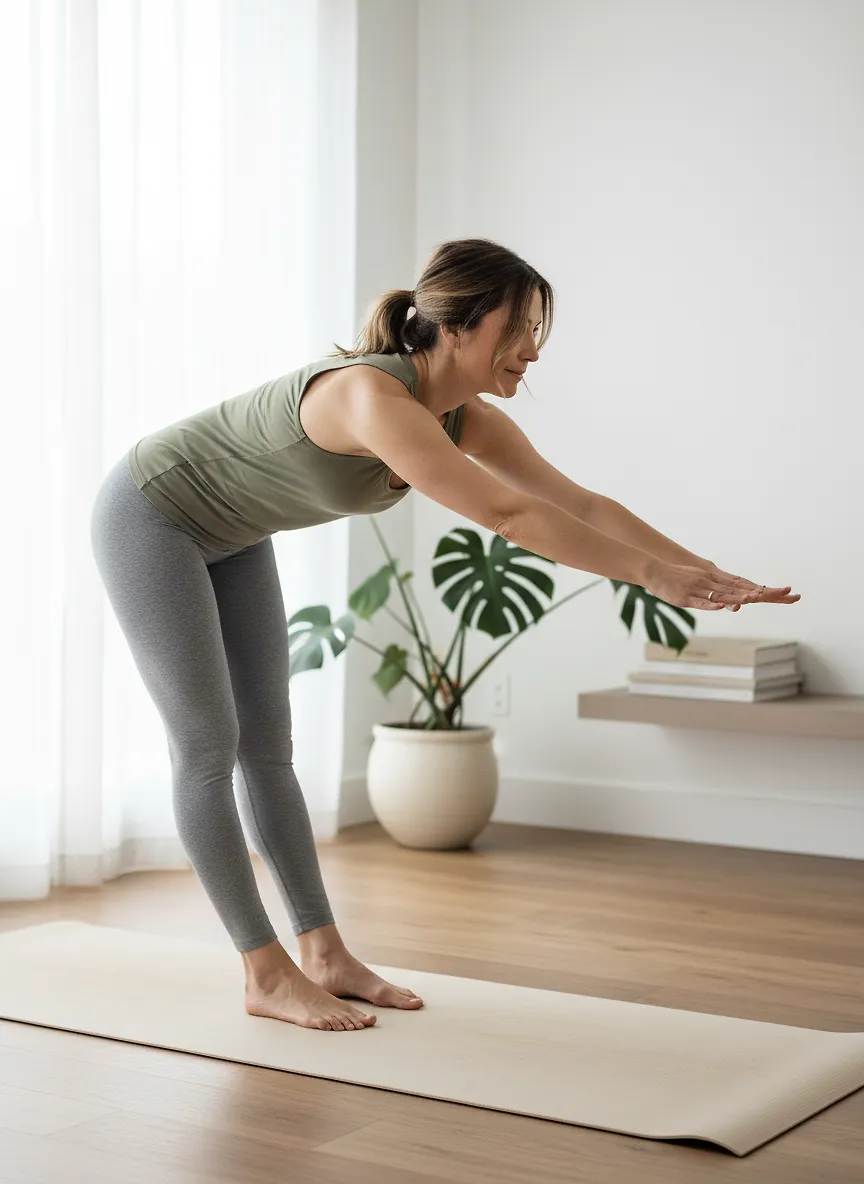
    This might look like a 15-minute yoga stretch on my living room floor while my kids have screen time, taking a work call while walking around my neighborhood, or having a family dance party in the kitchen. It’s about finding joy in movement and releasing the pressure for it to look a certain way. I’ve found that learning how to fit a 30-minute workout into my busiest days was less about time management and more about a mindset of integration.


    This journey to find my ‘and’ is far from over. There are still days that feel like a chaotic mess of spilled yogurt and urgent emails. But the difference is, I no longer see it as a failure. I see it as life—full, rich, and integrated.

    My name is Avery Sinclair, and I am a founder *and* a mother. A writer *and* a lego-builder. A strategist *and* a professional snack-maker. And embracing the ‘and’ has been the key to not just finding balance, but finding joy in the beautiful, imperfect whole.

    With warmth,

    Avery
  • My Digital Detox Checklist for a More Present, Peaceful Weekend

    My Digital Detox Checklist for a More Present, Peaceful Weekend

    My Digital Detox Checklist for a More Present, Peaceful Weekend

    Do you ever get to Sunday night, sink into the couch, and have that familiar, slightly hollow feeling? You know the one. You ask yourself, “What did I even do this weekend?” And when you really think about it, the answer involves a whole lot of scrolling. An endless refresh of Instagram, a few rabbit holes on TikTok, maybe a heated debate in a neighborhood Facebook group. Your thumbs might be tired, but your mind and soul certainly don’t feel rested.

    If this sounds familiar, you are so not alone. I remember my days back in corporate strategy, where my phone felt like a permanent extension of my hand. Even on weekends, the pull of emails, notifications, and the endless stream of “content” was relentless. I’d look up from my screen and realize hours had passed, the sun had shifted, and I’d missed the chance to connect with my family or even just with myself. It was exhausting.

    That’s why I started getting serious about unplugging—not in a dramatic, “I’m throwing my phone in a lake” kind of way, but through small, intentional choices. It’s not about demonizing technology; it’s about reclaiming our most precious resource: our time and attention. It’s about choosing presence over productivity, connection over content, and rest over restlessness.

    So, I’ve put together the exact digital detox checklist for a more present weekend that I use. It’s practical, it’s flexible, and it’s designed for real life. This isn’t about perfection; it’s about making a conscious effort to trade screen time for soul time. Ready to give it a try?

    Part 1: The Friday Prep Work

    A great weekend detox starts before the weekend even officially begins. A little bit of prep on Friday afternoon can set the stage for a truly restorative 48 hours.

    1. Define Your ‘Why’

    Before you do anything else, ask yourself: Why do I want to do this? Your answer is your anchor. Maybe you want to be more present with your kids. Maybe you want to finally finish that book on your nightstand. Maybe you’re craving the mental clarity that comes from less noise. My “why” is usually to feel more connected to my family and to quiet the constant hum of information in my head. Write your “why” down on a sticky note and put it somewhere you’ll see it. This will be your motivation when the temptation to scroll kicks in.

    2. Communicate Your Intentions

    A lot of our screen-related anxiety comes from the perceived pressure to be constantly available. Relieve that pressure by giving your key people a heads-up. A simple text to your family or close friends like, “Hey! I’m trying to do a bit of a digital detox this weekend to recharge, so I’ll be slow to respond to texts. Call if it’s urgent!” works wonders. It manages expectations and gives you permission to truly disconnect without worrying that you’re ignoring someone.

    3. Do a Quick Digital Declutter

    Think of this as tidying up your digital house before you relax in it. Take 15 minutes to do a quick sweep:

    • Turn off non-essential notifications: Do you really need a banner to pop up every time someone likes your photo? Go to your settings and be ruthless. I keep notifications on for texts, calls, and my calendar—and that’s about it.
    • Delete time-wasting apps: If you know TikTok is your black hole, try deleting it just for the weekend. You can always reinstall it on Monday. The extra step of having to re-download it is often enough of a barrier to prevent mindless opening.
    • Move social media apps off your home screen: Put them all in a folder on your last screen. Out of sight, out of mind (or at least, less top-of-mind). This simple act of adding friction can dramatically reduce how often you open them.

    Just like taking a few minutes to make your living room feel cozy and minimalist can transform your environment, tidying your phone can make your digital space feel just as calm.


    Part 2: Creating a Tech-Free Environment

    Your environment plays a huge role in your habits. By creating physical boundaries with your devices, you make unplugging from technology feel natural rather than forced.

    4. Establish ‘No-Phone Zones’

    This is my favorite and, I think, the most impactful tip on the list. Designate specific areas of your home where phones simply aren’t allowed. For our family, the two non-negotiable zones are the dinner table and our bedroom.

    At the dinner table, it means we’re actually talking, making eye contact, and connecting over our meal. In the bedroom, it means we’re winding down with books or conversation instead of the anxiety-inducing blue light of a screen. It has genuinely improved my sleep more than any fancy pillow or supplement ever has.

    5. Create a Central Charging Station (That’s Not Your Bedroom)

    To enforce the “no phones in the bedroom” rule, create a designated “device bed” somewhere else in the house. For us, it’s a small tray on a counter in the kitchen. About an hour before bed, we all plug our phones in for the night. This physical separation is key. It prevents that last-minute scroll in bed and the first-thing-in-the-morning email check. Your alarm? A cheap, simple digital alarm clock works perfectly.


    Part 3: Fill Your Time with Analog Joy

    The biggest challenge when you put your phone down is often, “…Now what?” The trick is to have appealing, non-digital alternatives ready to go. You’re not creating a void; you’re filling your time with things that genuinely nourish you.

    6. Plan One ‘Big’ Analog Activity

    Give your weekend a focal point that doesn’t involve a screen. It doesn’t have to be complicated or expensive. It could be a hike at a local trail, a long bike ride, a trip to the farmer’s market, or a full-on board game tournament in the living room. Having something to look forward to makes it easier to stay off your phone because you’re actively engaged in something else. If you need some inspiration, we have a whole list of weekend activities for active families on a budget that you might find helpful.

    7. Curate an ‘Analog Toolkit’

    When boredom strikes, it’s our default to reach for our phones. Head this off by creating a little toolkit of things you can do instead. Think of it as your self-care arsenal. My toolkit usually includes:

    • A stack of magazines or a new novel
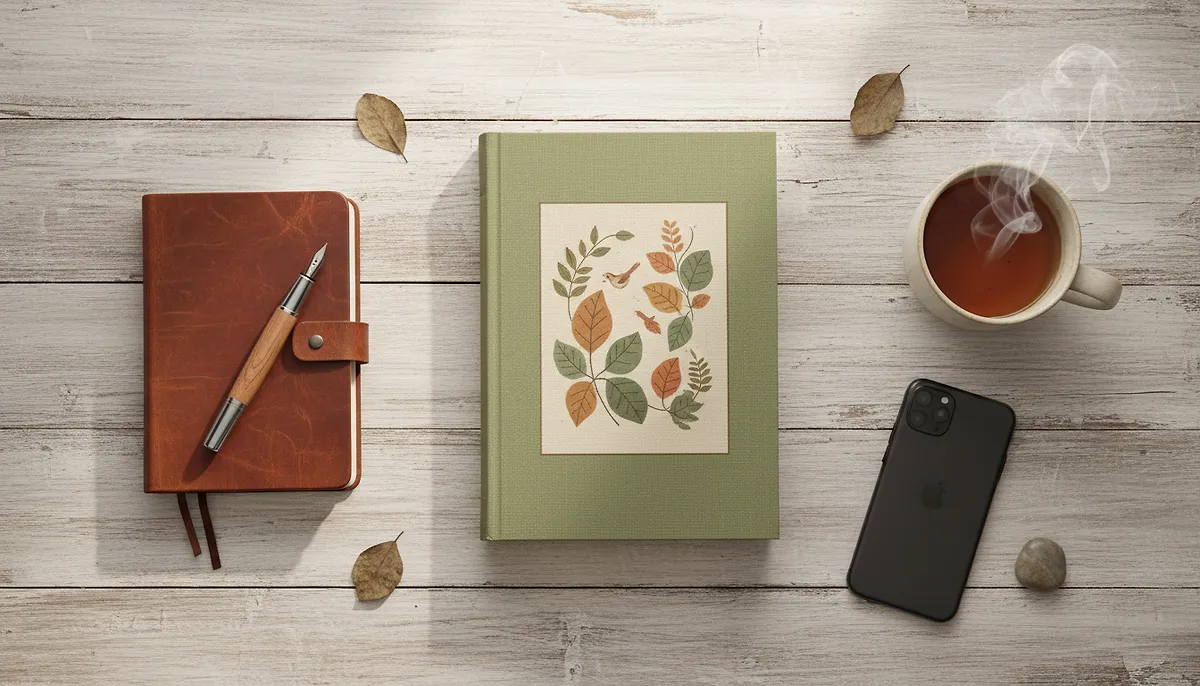
    • A journal and a nice pen for brain-dumping
    • A puzzle or a sketchbook
    • My yoga mat, for a quick stretch session

    Having these items visible and accessible makes it so much easier to choose them over your phone. It’s one of those practical self-care rituals that truly works because it removes friction and makes the better choice the easier choice.

    8. Get Outside, Even for a Few Minutes

    Never underestimate the restorative power of fresh air. Even a 15-minute walk around the block can reset your brain. Leave your phone at home (or at least in your pocket on Do Not Disturb). Pay attention to the feeling of the sun on your skin, the sound of the birds, the look of the leaves. These simple mindfulness tips help ground you in the present moment in a way a screen never can.


    Part 4: When You Need a Little Help (Using Tech to Fight Tech)

    Sometimes, willpower isn’t enough—and that’s okay! It’s perfectly fine to use a little technology to help you manage your… well, technology.

    9. Master Your Phone’s Focus Modes

    Both iPhones and Androids have powerful “Focus” or “Do Not Disturb” settings. You can create a “Weekend” mode that only allows calls and texts from specific people (like your partner or parents) and silences everything else. You can even set it to turn on automatically from Friday evening to Monday morning. It’s a set-it-and-forget-it way to build a digital boundary.

    10. Switch Your Screen to Grayscale

    This is a brilliant little brain hack I learned a while ago, and I, Avery, swear by it. Go into your phone’s accessibility settings and turn on the grayscale color filter. Suddenly, your phone becomes… boring. Those shiny red notification bubbles and vibrant Instagram photos lose all their psychological pull. It’s amazing how much less appealing your phone is when it looks like a 1950s television. It makes picking up a colorful book or looking out a window infinitely more attractive.

    The goal isn’t to get rid of your phone, but to create a life that’s so good you forget to check it.

    Grace Over Guilt: A Final Thought

    I want to leave you with this: a digital detox weekend is not a pass/fail test. If you find yourself scrolling for 20 minutes on Saturday afternoon, don’t throw in the towel. It’s not a failure. Just notice it without judgment, put the phone down, and return to your intention.

    The goal is progress, not perfection. It’s about slowly, intentionally building a life where your phone is a useful tool, not the main event. It’s about getting to Sunday night feeling rested, connected, and truly present in your own beautiful, messy, wonderful life.

    Here’s to a more peaceful weekend.

    With warmth,
    Avery

  • 7 Simple Steps to Make Your Living Room Feel Cozy and Minimalist

    7 Simple Steps to Make Your Living Room Feel Cozy and Minimalist

    7 Simple Steps to Make Your Living Room Feel Cozy and Minimalist

    Have you ever walked into your living room at the end of a long day and felt… nothing? Or worse, a subtle wave of stress? Maybe it’s the pile of mail on the coffee table, the mountain of throw pillows that don’t quite go together, or a general feeling of visual noise. On the other hand, maybe you’ve tried minimalism and your space now feels a little cold, a bit like a waiting room. I’ve been in both camps, and for a long time, I thought you had to choose: cozy but cluttered, or minimalist but sterile.

    But what if there’s a third option? A sweet spot where calm and comfort meet? That, my friends, is the magic of the ‘cozy minimalist’ aesthetic. It’s a philosophy I’ve come to adore, especially after leaving my fast-paced corporate strategy career behind. In my old life, my brain was cluttered, and my home often reflected that chaos. Now, I’m all about finding balance and joy in the everyday, and that starts with creating a home that feels like a true sanctuary.

    The goal isn’t to create a perfect, magazine-ready room. It’s to craft a space that genuinely soothes your soul—uncluttered but full of warmth, simple but rich with personal touches. It’s about having less stuff, but making sure the stuff you have is beautiful, functional, and deeply comforting. Ready to transform your living room into a cozy, minimalist oasis? Here are seven simple steps that have made all the difference in my own home.

    Step 1: Declutter with Intention, Not Deprivation

    Let’s get one thing straight: cozy minimalism isn’t about getting rid of everything you own. It’s about intentionally choosing what gets to stay. A cluttered space leads to a cluttered mind, and the first step to creating calm is to clear the physical (and mental) noise. But instead of a ruthless purge that leaves you with regrets, I approach it with a simple question: Does this item add value, beauty, or comfort to my life?

    If the answer isn’t a clear ‘yes,’ it might be time for it to go. Here are a few gentle methods I use:

    • The “Move It Out” Method: If you’re unsure about a decorative item, don’t throw it away immediately. Put it in a box and store it in a closet for a month. If you don’t miss it or even think about it, you have your answer.
    • One In, One Out: This is a golden rule for maintenance. If you buy a new coffee table book or a new throw pillow, an old one has to be donated or moved to another room. It prevents the slow creep of clutter.
    • Everything Needs a Home: Clutter often happens when items don’t have a designated spot. The remote, the mail, the kids’ stray toys—create simple systems (like a beautiful tray or a woven basket) to contain them.

    Step 2: Embrace a Warm, Neutral Canvas

    Color is a powerful tool for setting a mood. While stark white can feel clinical, warm neutrals create an instant sense of peace and cohesion. Think less about gallery white and more about the colors of natural materials. These tones provide a serene backdrop that allows your textures and personal items to shine.

    Some of my favorite go-to shades are:

    • Creamy Whites: Look for whites with a hint of yellow or pink, like Benjamin Moore’s “White Dove” or Sherwin-Williams’ “Alabaster.” They feel soft and inviting, not cold.
    • Warm Grays & Greiges: A gray with brown undertones (a “greige”) is the perfect chameleon color, shifting beautifully with the light throughout the day.
    • Earthy Tones: Think soft tans, muted terracotta, and deep olive green. These can be used on a whole wall for a moody feel or as a beautiful accent.

    By sticking to a cohesive palette, the whole room will feel more intentional and calming, even before you add a single piece of furniture.

    Step 3: Layer Textures Like You Mean It

    This, right here, is the secret ingredient to making minimalism feel cozy. A room with only smooth, hard surfaces will always feel a bit sterile. Texture is what adds depth, warmth, and that irresistible desire to curl up and stay awhile. It’s about engaging the sense of touch.

    Think about how you dress for comfort—soft fabrics, cozy knits. The same principle applies to your home. In fact, this philosophy is a huge part of how I approach my own closet, which you can read more about in my guide to building a minimalist loungewear capsule wardrobe. Just as a cashmere sweater feels like a hug, a wool throw on your sofa provides a similar sense of comfort.

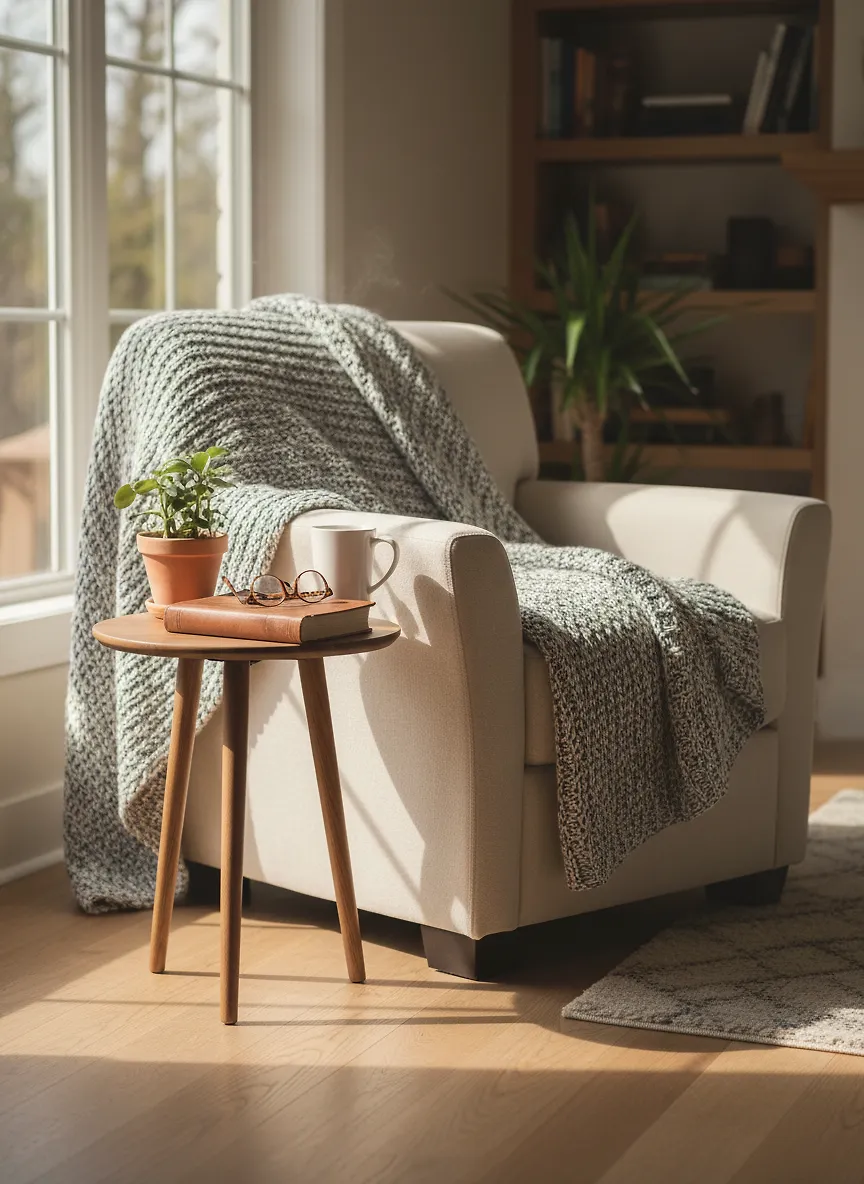
    I have this one incredibly soft, chunky knit blanket that I drape over the arm of our sofa. It’s not just for looks; it’s an open invitation. Every evening, one of the kids or my husband (or me!) will inevitably grab it. It’s a cue to relax. Mix and match different textures to create visual interest and tactile comfort:

    • A chunky wool or cashmere throw over a linen sofa.
    • Velvet cushions paired with simple cotton ones.
    • A soft, high-pile rug on a hardwood floor.
    • Woven baskets for storage.
    • A smooth leather accent chair.
    Layering textures like linen, wool, and wood creates warmth and depth.

    Step 4: Create a Glow with Layered Lighting

    Please, I beg you, step away from the “big light.” You know the one—that single, harsh overhead fixture that floods the room with unflattering, sterile light. Great lighting is one of the most overlooked aspects of interior design, and it’s crucial for creating a cozy atmosphere. The goal is to create pools of warm light around the room.

    Aim for at least three sources of light, spread out at different heights:

    • Ambient Lighting: This is your overall light source. If you have an overhead light, install a dimmer switch. This is a non-negotiable game-changer!
    • Task Lighting: A stylish floor lamp next to your favorite reading chair, or a small table lamp on a side table. It’s both functional and beautiful.
    • Accent Lighting: This is the fun part! A small, low-wattage lamp on a bookshelf, a picture light over a favorite piece of art, or even the simple flicker of candlelight.

    And a pro tip: pay attention to your lightbulbs! Look for bulbs labeled “warm white” or with a color temperature around 2700K. This will cast a soft, golden glow that’s much more flattering and relaxing than the cool blue light of office buildings.

    Step 5: Choose Furniture with Form and Function

    In a cozy minimalist space, every piece of furniture has to earn its keep. This means focusing on quality over quantity and choosing pieces that are both beautiful and highly functional. Look for furniture with clean, simple lines and natural materials like wood, which adds instant warmth.

    Think about pieces that can do double duty. An ottoman that not only serves as a footrest or extra seating but also opens up to store blankets. A slim console table behind the sofa that can act as a charging station and a display surface. When your furniture works harder, you need less of it, which naturally leads to a more open and calming space. Before you buy, ask yourself: Is it comfortable? Is it well-made? Does it serve a clear purpose in this room?

    Step 6: Bring the Outdoors In

    Humans have an innate connection to nature (it’s called biophilia!), and bringing natural elements into your home is one of the easiest ways to make a space feel more alive and serene. Even in the most minimal room, a touch of green can make all the difference.

    You don’t need to turn your living room into a jungle. Start small:

    • Houseplants: If you’re a notorious plant-killer like I used to be, start with something forgiving like a snake plant or a ZZ plant. They thrive on neglect!
    • Branches or Dried Florals: A tall vase with a few dramatic branches of eucalyptus or a small bud vase with some dried pampas grass can be just as impactful as a full bouquet, and they last forever.
    • Natural Materials: Think beyond plants. A wooden bowl on the coffee table, a set of stone coasters, or a vase made of earthenware all count toward bringing that organic, earthy feeling indoors.

    Step 7: Decorate with Your Story

    This is my favorite step, and it’s the one that truly separates a cozy minimalist home from a sterile catalog showroom. After you’ve cleared the clutter and built your foundation of warm neutrals and textures, it’s time to add back the most important part: you. Your decor should tell your story.

    Resist the urge to buy generic, mass-produced decor just to fill a void on a shelf. Instead, be a curator of your own life. Display a few framed photos from a memorable trip, a stack of your all-time favorite books on the coffee table, a piece of art from a local maker you admire, or the ceramic mug your child made for you. For me, Avery Sinclair, this has been the most transformative part of the process—turning my home from a place where I just live into a space that truly reflects my family’s journey and values.

    These meaningful items are not clutter. They are reminders of joy, love, and adventure. They infuse your space with personality and soul. Creating this personal sanctuary is one of my favorite practical self-care rituals for overwhelmed working moms, because it’s a constant, gentle reminder of what truly matters.


    Your Cozy, Minimalist Oasis Awaits

    Creating a cozy and minimalist living room isn’t a weekend project; it’s an ongoing practice of intentionality. It’s about tuning into how your space makes you feel and having the confidence to remove what doesn’t serve you, while cherishing what does. By focusing on a calm palette, rich textures, warm lighting, and meaningful objects, you can create a living room that’s more than just a room—it’s a retreat.

    I hope these steps empower you to start crafting a space that feels like a deep, relaxing exhale at the end of the day. You deserve a home that supports and rejuvenates you. Now go get cozy.

    Warmly,
    Avery

  • How I Fit a 30-Minute Workout Into My Busiest Days

    How I Fit a 30-Minute Workout Into My Busiest Days

    Let’s be honest. The morning alarm blares, and before your feet even hit the floor, your brain is already scrolling through a to-do list that seems to defy the laws of time and space. School drop-offs, a packed meeting schedule, the looming question of “what’s for dinner?”—and somewhere, buried under all of that, is the hopeful, almost laughable, calendar entry: “Workout.”

    For years, that was my reality. I was stuck in an all-or-nothing mindset. If I couldn’t block out a full hour, drive to the gym, get in a “proper” session, and drive back, then what was the point? More often than not, the answer was to just skip it. The result? I felt sluggish, my stress levels were through the roof, and my favorite jeans felt just a little too snug. But what if I told you that the secret to a consistent fitness routine isn’t about finding more time, but about reclaiming a small, powerful window in your day?

    In this story, I’m pulling back the curtain on my personal, non-negotiable strategy for how to fit a 30-minute workout into a busy schedule. This isn’t about grueling, two-hour gym sessions or an impossible standard. It’s about finding a sustainable rhythm that fuels your body, clears your mind, and proves that 30 minutes is more than enough to change everything.

    The Shift That Changed Everything: From “Hour-Long or Nothing” to “The Power of 30”

    Back in my corporate strategy days, my life was a series of spreadsheets and back-to-back meetings. I’d tell myself, “I’ll go to the gym after work.” But by 7 p.m., after a draining day, the only thing I wanted to strategize was my route from the car to the couch. The guilt was constant. I felt like I was failing at this fundamental piece of self-care.

    The breakthrough came not from a sudden burst of motivation, but from a moment of pure desperation. I was overwhelmed, tired, and I knew something had to give. I remember thinking, “I don’t have an hour, but maybe… maybe I have 20 minutes?” So, I rolled out a dusty yoga mat in my living room and followed a free video on YouTube. It wasn’t perfect. The dog tried to lick my face during downward dog, and I was pretty sure my form was questionable. But when I was done, I felt… better. Lighter. Clearer.

    That was the lightbulb moment. The goal wasn’t to become a world-class athlete overnight. The goal was to show up for myself, consistently. It’s a lesson I, Avery Sinclair, had to learn the hard way: consistency trumps duration, every single time. Four 30-minute workouts a week are infinitely more impactful than one heroic but sporadic 90-minute session a month. This mindset shift is the foundation of creating a fitness habit that actually sticks.

    My Non-Negotiable Strategy: The “Workout Sandwich”

    So, how do you find those 30 minutes? My secret is something I call the “Workout Sandwich.” It’s simple: I sandwich my workout between two existing, non-negotiable daily habits. This way, the workout doesn’t feel like a floating, optional task that can easily be bumped. It becomes an integral part of a sequence I already perform without thinking.

    • The Morning Sandwich: This is my personal favorite. The sequence is: Wake up -> 30-Minute Workout -> Shower and get ready for the day. By “sandwiching” my movement between waking up and showering, I get it done before the day’s chaos can derail me. It sets a positive, energetic tone for everything that follows.
    • The Mid-Day Sandwich: For those who aren’t morning people, this is a fantastic option, especially in a work-from-home setting. The sequence: Finish a major work block -> 30-Minute Workout -> Eat lunch. It’s the perfect mental and physical reset, breaking up sedentary screen time and preventing that dreaded afternoon slump. It can do wonders for your focus—and for your posture, especially if you’re struggling to maintain an ergonomic WFH setup in a small space.
    • The Evening Sandwich: This can be a lifesaver for busy parents. The sequence: Kids are in bed -> 30-Minute Workout -> Wind-down routine (reading, tea, etc.). This carves out a moment that is purely for you after a day of caring for everyone else. It’s a powerful way to decompress and transition from “parent/professional mode” to “rest mode.”

    The key is to identify your anchor habits and decide where your workout fits best. Once it becomes part of a chain, the decision-making process is eliminated. You just do it.

    My Go-To Time-Saving Exercises for a Quick Home Workout

    You don’t need a home gym or fancy equipment to get a fantastic workout in 30 minutes. My approach is to have a small toolkit of routines I can turn to depending on my energy levels and what my body needs that day.

    The 10-Minute HIIT Circuit (Repeat 2-3 Times)

    High-Intensity Interval Training (HIIT) is the busy person’s best friend. It’s incredibly efficient at boosting your heart rate and metabolism. My go-to circuit is simple: 45 seconds of work, followed by 15 seconds of rest. I set a timer and run through this list twice, with a 1-minute break in between, for a killer 20-minute workout (add a third round if you have time!).

    1. Jumping Jacks
    2. Bodyweight Squats
    3. Push-ups (on knees or toes!)
    4. High Knees
    5. Plank
    6. Glute Bridges
    7. Alternating Lunges
    8. Burpees (the ultimate love-hate exercise!)
    9. Mountain Climbers
    10. Rest (1 minute)

    The “Mind & Body” Flow (For Lower-Energy Days)

    Let’s be real: some days, the thought of a single jumping jack is just too much. On those days, I opt for a 30-minute “Mind & Body” flow. This isn’t about pushing my limits; it’s about gentle movement, stretching, and reconnecting with my body. I put on a calming playlist and move through a series of yoga-inspired poses like Cat-Cow, Downward Dog, Warrior I and II, and deep stretches like Pigeon Pose and Forward Folds. It’s a fantastic antidote to a day spent hunched over a laptop and has become one of my most cherished practical self-care rituals for overwhelmed working moms.

    The “Just Get Moving” Method

    This is my ultimate fallback for days when motivation is at an absolute zero. The only rule is to put on my workout clothes and move my body for 30 minutes. That’s it. Sometimes it’s a brisk walk around the neighborhood listening to a podcast. Sometimes it’s a dance party in the kitchen with my kids. Other times, it’s just putting on my favorite pair of supportive leggings for postpartum support and doing some foam rolling while watching TV. The point isn’t the intensity; it’s the act of honoring the commitment to myself.


    How to Stay Motivated When Your Couch Is Calling

    Knowing how to work out is one thing; actually doing it is another. Here are a few mindset tricks that keep me going.

    You don’t have to feel good to start, but you almost always have to start to feel good.

    Avery Sinclair

    The “Get Dressed for Success” Trick

    On days I plan a morning workout, I literally lay my workout clothes out the night before. On WFH days with a planned mid-day session, I’ll often put on my workout clothes in the morning. It’s a psychological trick—once I’m dressed for it, I’ve removed a major barrier to entry. It feels silly to get to noon and then change *out* of my activewear without having done anything. My activewear has become an essential part of my daily uniform, functioning as an extension of my minimalist loungewear capsule wardrobe. It’s all about comfortable, high-quality pieces that make me feel good and are ready for action.

    Track the Habit, Not the Performance

    Forget tracking calories burned or miles run, especially at first. Instead, get a simple wall calendar and draw a big, satisfying ‘X’ over every day you complete your 30 minutes. After a week or two, you’ll have a visual chain of success. Your brain won’t want to “break the chain,” which can be a surprisingly powerful motivator on a low-energy day.

    Redefine “Success”

    Finally, and perhaps most importantly, change your definition of a “successful” workout. It’s not about how much you sweat or how heavy you lift. A successful workout is one that you did. It’s the one where you showed up for yourself, even when you didn’t want to. It’s the burst of energy you feel afterward. It’s the sense of accomplishment. It’s the stress that melts away. Focus on how it makes you feel, not just on the physical results, and it becomes a reward in itself.

    A Sample Weekly Plan That Actually Works

    To show you how this all comes together, here’s a peek at what a typical week might look like for me. Notice it’s a mix of intensity and includes rest—because recovery is just as important as the work!

    Day30-Minute Activity
    MondayHIIT Circuit
    TuesdayBrisk Walk Outside (Podcast Time!)
    WednesdayMind & Body Flow (Yoga/Stretching)
    ThursdayActive Recovery or Full Rest
    FridayHIIT Circuit or a Fun YouTube Dance Workout
    SaturdayLonger Family Activity (Hike, Bike Ride)
    SundayFull Rest / Gentle Stretching
    This is a flexible template! Swap days based on your energy and schedule.

    Fitting fitness into a busy life isn’t about a massive overhaul. It’s about small, smart, and sustainable choices. It’s about giving yourself grace and celebrating the act of showing up. That 30-minute window isn’t just another task to check off your list; it’s a powerful investment in your own well-being, a moment of calm in the chaos, and a gift you give yourself every single day.

    Start small, find your sandwich, and see how 30 minutes can truly make all the difference.

    With warmth and comfort,
    Avery

  • An Honest Opinion: Are Expensive Cashmere Sweaters Worth It?

    An Honest Opinion: Are Expensive Cashmere Sweaters Worth It?

    An Honest Opinion: Are Expensive Cashmere Sweaters Worth It?

    I’ve been there. Standing in a beautifully lit store, fingers tracing the impossibly soft fabric of a sweater. I glance at the tag, and my breath catches. That can’t be right. Three digits—sometimes starting with a number I’m not entirely comfortable with—for a single piece of clothing. My mind immediately starts doing the math: that’s a week of groceries, a couple of tanks of gas, a significant chunk of the kids’ activity fees. I fold it carefully, place it back on the polished wooden table, and walk away with a sigh.

    The allure of a 100% cashmere sweater is powerful, but the price tag can feel like a barrier to entry. For years, I preached the gospel of ‘quality over quantity,’ a philosophy I still stand by. But even I had to ask myself: is this particular luxury staple truly a worthwhile investment, or is it just a status symbol with a high cost of ownership? It’s one of the most common questions I get, so I decided it was time to really dive in. I’m pulling back the curtain on my own experience, analyzing the cost-per-wear, the essential care routines, and how it stacks up against more affordable options to give you my final, honest verdict.

    First, What Makes Cashmere So Special (and So Expensive)?

    Before we can talk about value, we have to understand what we’re paying for. Cashmere isn’t just wool from a fancy sheep. It’s a specific fiber from the fine, downy undercoat of cashmere goats. These goats live in harsh, cold climates, and this super-soft layer is what keeps them warm.

    Here’s the kicker: the fibers are harvested by hand-combing the goats during their natural shedding season in the spring. A single goat produces only a few ounces of this precious fiber each year—sometimes just enough for a scarf. It can take the fleece of two to four goats to make a single sweater. When you factor in the delicate harvesting process, the cleaning, the sorting of the fibers by quality (longer, finer fibers are more expensive and less prone to pilling), and the expert spinning and knitting, that price tag starts to make a little more sense.

    The result is a fabric that’s up to eight times warmer than sheep’s wool, yet incredibly lightweight and breathable. It doesn’t have the itch-factor of traditional wool, and when you slip it on, it feels less like clothing and more like a gentle, comforting hug. It’s the very definition of everyday luxury.

    Let’s Talk Numbers: The Power of Cost-Per-Wear

    As a former corporate strategist, I can’t help but look at things through a practical, analytical lens. My approach to building an investment wardrobe is no different. The initial price of an item is only one part of the equation. The real story is in the cost-per-wear (CPW).

    CPW is simple: Total Cost of Item ÷ Number of Times Worn = Cost-Per-Wear.

    Let’s imagine a classic, high-quality, 100% cashmere crewneck sweater that costs $350. It’s an intimidating number, I know. But let’s be realistic about how you’d wear it. It’s a timeless piece you could wear for work-from-home video calls, weekend errands, and cozy evenings in. If you wear it just 15 times between fall and spring, that’s $23.33 per wear in the first year.

    But a well-cared-for cashmere sweater isn’t a one-season wonder. It’s a lifetime piece. Let’s say you wear it 15 times a year for five years (a very conservative estimate). That’s 75 wears.

    $350 ÷ 75 wears = $4.67 per wear.

    Now, compare that to a trendy, $60 acrylic sweater from a fast-fashion brand. It looks great for a few wears, but it starts pilling and losing its shape after a handful of washes. Maybe you get one season—15 wears—out of it before it looks tired. That’s a CPW of $4.00. It seems cheaper, but you have to replace it every single year. Over five years, you’d spend $300 on subpar sweaters that never felt as good or looked as elegant as the single cashmere piece. Suddenly, the investment piece doesn’t just feel better—it makes financial sense, too.

    The Catch: An Investment Requires Maintenance

    Here’s the part where I get brutally honest. A cashmere sweater is not a “buy it and forget it” item. You can’t just toss it in the hamper with your kids’ soccer jerseys and hope for the best. That low cost-per-wear I just calculated? It’s entirely dependent on you treating this garment with the respect it deserves. The good news is, it’s easier than you think.

    My Tried-and-True Cashmere Care Routine

    • Wash Sparingly: Cashmere is naturally breathable and antibacterial. You don’t need to wash it after every wear. I typically wash my sweaters every 4-5 wears, unless something gets spilled on them.
    • Hand-Wash is Best: It sounds daunting, but it’s a 15-minute task. Fill a clean basin with cool water and a small amount of a gentle, pH-neutral detergent made for wool and cashmere. Submerge the sweater, gently squeeze the suds through it (never wring or twist!), and let it soak for 10 minutes.
    • Rinse and Reshape: Drain the soapy water and rinse with cool, clean water until the suds are gone. Gently squeeze out the excess water. Place the sweater on a thick, clean towel, roll it up like a jelly roll, and press firmly to absorb more water.
    • Lay Flat to Dry: Unroll the sweater and lay it flat on a fresh, dry towel or a mesh drying rack, away from direct sunlight or heat. Reshape it to its original dimensions. Never, ever hang a wet cashmere sweater—the weight of the water will stretch it out permanently.
    • Storage is Key: In the off-season, make sure your sweaters are clean, and then fold them neatly. Store them in a breathable garment bag with some cedar blocks or lavender sachets to deter moths.

    A Note on Pilling (Because It Happens!)

    I remember the first time I noticed tiny little balls of fluff forming on the underarms of my first “real” cashmere sweater. I panicked. Did I buy a dud? Did I ruin it? The truth is, pilling is a natural characteristic of fine animal fibers. It’s caused by friction—where your arms rub against your body, or where your purse strap sits. Even the most expensive cashmere will pill a bit, especially when it’s new.

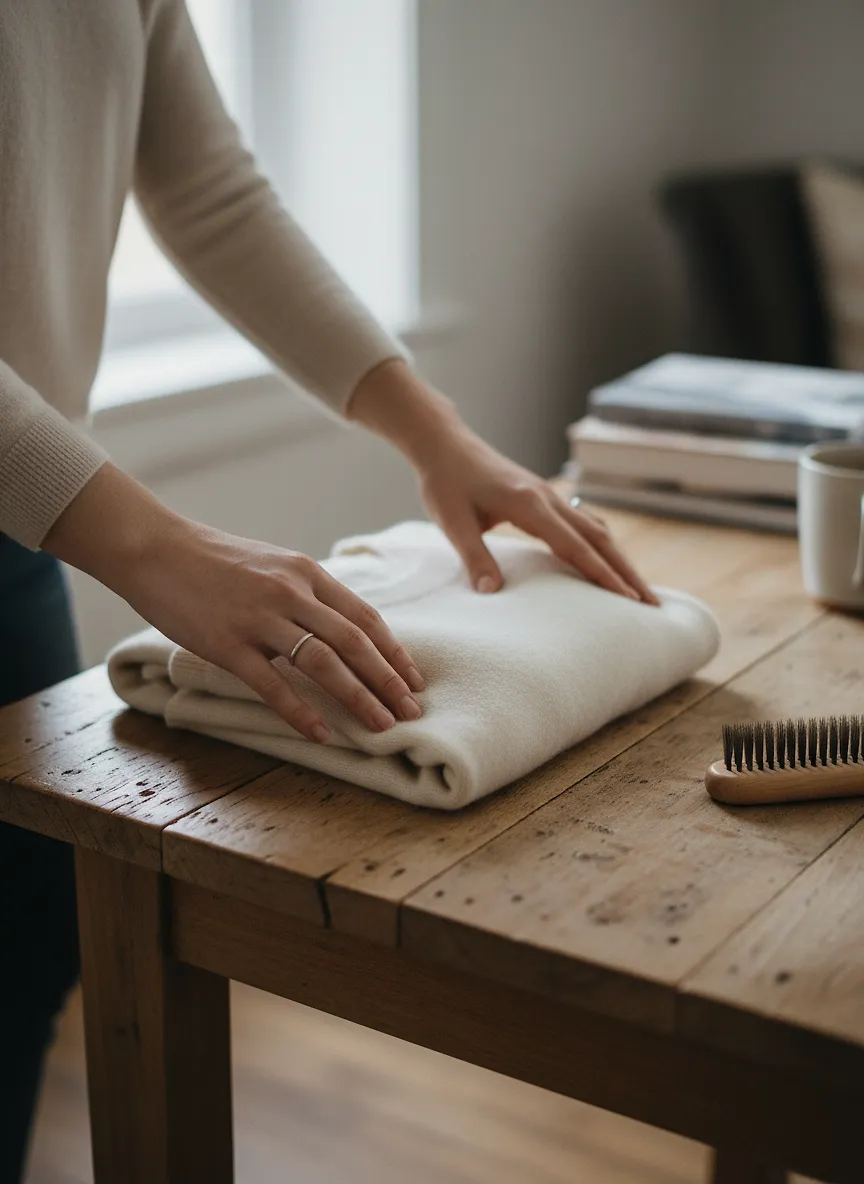
    The solution isn’t to stop wearing it; it’s to manage it. Invest in a small, inexpensive cashmere comb or a fabric shaver. Lay the sweater on a flat surface and gently glide the comb over the pilled areas. It takes two minutes and leaves your sweater looking brand new. It’s a small, almost meditative ritual that’s part of the ownership experience.


    The Contenders: How Do Cheaper Alternatives Stack Up?

    Okay, so maybe a $350 sweater just isn’t in the cards right now. I get it. What are the other options, and are they any good?

    Cashmere Blends

    You’ll often see sweaters labeled “cashmere blend,” which usually means a small percentage of cashmere (sometimes as low as 5-10%) is blended with wool, silk, or synthetic fibers like nylon. These are more affordable, but you lose some of that signature cashmere magic. They won’t be as soft or as warm, and blends with synthetics can be more prone to stubborn pilling and won’t be as breathable.

    Merino Wool

    In my opinion, high-quality merino wool is the absolute best alternative to cashmere. It comes from merino sheep and has many of the same amazing properties: it’s soft (though not *quite* as cloud-like as cashmere), it’s excellent at regulating body temperature, it’s breathable, and it’s naturally odor-resistant. It’s also more durable and generally less expensive. A great merino wool sweater is a fantastic investment and a cornerstone of my guide to building a minimalist loungewear capsule wardrobe. It’s the perfect intersection of comfort, quality, and value.

    Recycled Cashmere

    A growing number of sustainable brands are using recycled cashmere, made from post-consumer yarn that is sorted, shredded, and re-spun. This is a wonderful, eco-friendly option that reduces waste. The fibers are shorter, so it may not feel quite as buttery soft as virgin cashmere, but it’s a purchase you can feel fantastic about.

    My Final Verdict: So, Are They Worth It?

    After years of owning, wearing, and caring for cashmere, my answer is a resounding… yes, but with a few important conditions.

    An expensive cashmere sweater is worth it if:

    1. You choose a timeless style and color. Don’t drop a fortune on a trendy, of-the-moment piece. Opt for a classic crewneck, v-neck, or cardigan in a neutral color (like camel, navy, grey, or cream) that will work with your wardrobe for the next decade.
    2. You are committed to the care. If you know you’re the type to shrink things in the wash or can’t be bothered with hand-washing, be honest with yourself. In that case, a high-quality merino wool sweater that can handle a gentle machine cycle might be a smarter choice for your lifestyle.
    3. It fits your budget without causing stress. A piece of clothing should bring you joy, not financial anxiety. If you have to save up for it, great! But don’t go into debt for a sweater. It’s a luxury, not a necessity.

    For me, Avery, my favorite cashmere sweater is more than just an item of clothing. It’s the piece I reach for on stressful WFH days when I need to feel put-together but also deeply comfortable. It’s what I throw on over a t-shirt for a chilly evening walk with my family. The act of slipping it on has become one of my favorite practical self-care rituals for overwhelmed working moms; it’s a small, tangible way to be kind to myself. It’s a quiet luxury that feels like a reward for the hard work of balancing a business and a family.

    Investing in that first piece felt like a big step, but years later, it still looks as beautiful as the day I bought it. It has become a trusted friend in my closet. And when I think about the hundreds of times I’ve worn it, the feeling of comfort it’s given me, and the fact that I’ll still be wearing it five years from now—well, the cost-per-wear starts to feel priceless.

    Stay cozy,

    Avery

  • 10 Weekend Activities for Active Families on a Budget

    10 Weekend Activities for Active Families on a Budget

    10 Weekend Activities for Active Families on a Budget

    Do you ever get to Friday afternoon and feel that familiar wave of weekend pressure? The one that whispers you should have something spectacular—and probably expensive—planned for the family? I know I do. In my past life as a corporate strategist, my weekends felt like another project to manage, complete with budgets and performance metrics. The goal was always to maximize ‘fun,’ which I mistakenly thought meant maximizing spending.

    But since I’ve intentionally shifted my focus to a slower, more balanced way of life, I’ve discovered a beautiful truth: the most memorable family moments often have the smallest price tags. It’s not about the elaborate vacations or the pricey amusement parks. It’s about logging off, getting outside, and simply being present with each other. It’s about creating an active family lifestyle that feels joyful and sustainable, not stressful.

    So, if you’re looking to get your family moving and connecting without draining your bank account, you’re in the right place. I’ve put together a list of our family’s favorite budget-friendly weekend activities. These are the simple, joy-filled things we return to again and again.


    10 Fun & Free (or Nearly Free) Weekend Activities

    1. The Neighborhood Scavenger Hunt

    This one is a classic for a reason. It costs nothing, requires minimal prep, and transforms a simple walk around the block into a grand adventure. Before you head out, create a list of things for your kids to find. You can make it a simple checklist (a red door, a dog, a bicycle, a pinecone) or get more creative with sensory items (something smooth, something bumpy, something that smells sweet). The kids get to run ahead, shouting with excitement when they spot the next item, and you get to enjoy a walk at a pace that actually allows you to talk to your partner. It’s screen-free, gets everyone’s steps in, and encourages kids to be more observant of their surroundings.

    2. Host a Backyard Olympics

    Unleash your family’s competitive spirit with your own version of the Olympic Games. You don’t need any fancy equipment—just a bit of imagination. Think long jumps in the sandbox, a ‘discus’ throw with a frisbee, a three-legged race, and an obstacle course made from patio furniture and old boxes. You can even make medals out of cardboard and foil. We did this a few weeks ago, and while it was chaotic and nobody really kept score, the amount of laughter was off the charts. It’s a fantastic way to burn off energy and work together as a team.

    3. Explore a New Local Trail

    Most towns and cities have a network of local parks and nature preserves with well-marked trails that are completely free to access. A quick search online can reveal hidden gems you never knew existed right in your own backyard. Pack a water bottle, some simple snacks like apples and granola bars, and make a morning of it. Hiking is an incredible way to disconnect from the hustle and reconnect with nature and each other. It’s also the perfect excuse to wear your most comfortable activewear. A good pair of leggings makes all the difference—I’m a huge fan of styles with plenty of support, especially since my body has changed after having kids. If you’re on the hunt for a great pair, I’ve shared some of my favorites in my guide to the best women’s running leggings for postpartum support.

    4. Go on a Park Tour

    Does your family have a ‘regular’ park you always go to? Shake things up by becoming park connoisseurs! Make a list of 3-4 different playgrounds in your town or a neighboring one and spend 45 minutes at each. It’s amazing how a new slide or a different set of monkey bars can feel like a whole new world to a child. You can even create a little rating system and have everyone vote on their favorite park at the end of the day. It’s a simple way to add variety and exploration to a weekend staple.

    5. Build an Epic Fort (Indoors or Out)

    On a rainy day, there’s nothing better than a living room fort. Pull the couch cushions onto the floor, drape sheets over chairs, and string up some fairy lights. It becomes a magical cave for reading books, telling stories, and eating snacks. If the weather is nice, take the project outside! Use old tarps, blankets, and rope to build a shelter between two trees. It’s a great exercise in creativity, engineering, and teamwork.

    6. Take a Family Bike Ride on a New Path

    Dust off those bikes in the garage and find a local greenway or bike path. Biking together is a wonderful activity for families with slightly older kids who are confident riders. It allows you to cover more ground than walking and see your community from a different perspective. Many communities have converted old railway lines into flat, paved trails that are perfect for a leisurely family ride. Pack a picnic to enjoy at the halfway point!


    7. Volunteer for a Community Clean-Up

    This is one of my personal favorites because it combines being active with teaching a valuable lesson about citizenship and caring for our environment. Many local conservation groups or city parks departments host weekend clean-up events at parks, rivers, or beaches. You get to spend time outside together while doing something truly meaningful. It’s a powerful way to show your kids that being part of a community means taking care of it. To me, this kind of purposeful activity is one of the most effective practical self-care rituals out there—it shifts the focus outward and creates a sense of accomplishment and connection.

    8. Have a High-Energy Dance Party

    Sometimes, the simplest ideas are the best. When everyone’s feeling cooped up and antsy, just put on a playlist of your family’s favorite high-energy songs and let loose in the living room. No rules, just movement. For extra fun, play freeze dance—one person is in charge of pausing the music, and everyone has to freeze in their pose. It’s 30 minutes of pure, silly, heart-pumping fun.

    9. Try Geocaching: A Real-Life Treasure Hunt

    If your kids love technology but you want them to get outside, geocaching is the perfect compromise. It’s a worldwide treasure-hunting game where participants use a GPS-enabled device (like your smartphone) to find hidden containers called geocaches. There are millions of caches hidden all over the world—likely hundreds right in your area. Just download the app, create a free account, and start your search. It adds a layer of purpose and excitement to any walk or hike.

    10. Cook a Meal Together—From Scratch

    Okay, so this one is more ‘active in the kitchen,’ but it’s still a fantastic, hands-on family activity. Instead of ordering takeout, decide on a meal to make together. Making pizza or pasta from scratch is always a huge hit. Kids can help measure ingredients, knead dough, and choose their own toppings. It’s a little messy, a lot of fun, and teaches a valuable life skill. After a long day of being outside, there’s nothing better than gathering in the kitchen and then cozying up on the couch to enjoy the meal you all created together. It’s moments like these that call for the ultimate comfort—which is why having a minimalist loungewear capsule wardrobe is a non-negotiable for me, Avery. A great set of joggers and a soft sweatshirt is the perfect uniform for a relaxing family evening in.


    Remember that pressure I mentioned feeling on a Friday afternoon? It melts away when I remember that what my family truly craves is connection, not consumption. It’s not about how much we spend, but how we spend our time.

    I hope this list gives you a little inspiration for your next weekend. The real magic isn’t in the grand gestures; it’s in the simple, shared moments of movement and laughter. Here’s to making more of them.

    With warmth,

    Avery

  • How to Create an Ergonomic WFH Setup in a Small Space

    How to Create an Ergonomic WFH Setup in a Small Space

    When I first traded my corporate office for a corner of my apartment, my initial setup was… let’s just say, less than ideal. I spent the first few weeks hunched over my laptop at the dining table, feeling that all-too-familiar tech-neck creep in by lunchtime. My back ached, my shoulders were tight, and my focus was shot by 3 p.m. I figured this was just the price of admission for the work-from-home life. But was it?

    It turns out, the answer is a resounding no. You don’t need a dedicated home office or a four-figure budget to create a workspace that supports your body instead of fighting against it. Your work-from-home setup shouldn’t be a pain in the neck—literally. After a lot of trial and error (and a few too many days feeling like a folded-up pretzel), I’ve discovered that creating a comfortable, productive, and ergonomic workspace is all about making small, intentional choices. Even if you’re working from a tiny nook in your bedroom or a sliver of your living room, you can transform it into a place that fosters focus and well-being.

    This guide is my playbook for doing just that. We’ll walk through everything from choosing the right chair (or hacking the one you have) to mastering monitor height and embracing simple tricks to improve your posture and energy throughout the day. Let’s make your WFH space work for you.

    The Foundation: Your Chair is Your Throne (Even a Makeshift One)

    Let’s be real: most of us living in apartments or smaller homes don’t have the space for a massive, executive-style ergonomic chair. And that’s okay! The goal isn’t to replicate a corporate high-rise office, but to support your body with what you have. The chair is the single most important piece of the puzzle, so it’s where we’ll start.

    If You Can Get a Dedicated Chair…

    If you have the budget and a little bit of space, investing in a decent ergonomic chair is a game-changer. You don’t need the top-of-the-line model. Look for these key features:

    • Adjustable Height: Your feet should be able to rest flat on the floor with your knees at roughly a 90-degree angle.
    • Lumbar Support: This is crucial. A good chair will have a curve that supports the natural inward curve of your lower back. Adjustable lumbar support is even better.
    • Adjustable Armrests: You want your arms to rest gently on them with your shoulders relaxed, not hunched. Your elbows should be at about a 90-degree angle.
    • Swivel and Wheels: These aren’t just for fun—they allow you to move freely to reach things without straining or twisting your body.

    And remember, ergonomic doesn’t have to mean ugly! There are so many stylish, minimalist options available now that blend beautifully into a modern home.

    Hacking Your Existing Chair for Maximum Comfort

    Okay, so what if a new chair isn’t in the cards? Welcome to the club! For a long time, my “office chair” was one of our dining chairs. Here’s how to upgrade whatever you’re sitting on.

    The Magic of a Lumbar Pillow: This is my number one hack. If you do nothing else, get a lumbar support pillow. It’s a small, inexpensive addition that makes a world of difference by preventing you from slouching and supporting your lower back. You can even roll up a bath towel and place it in the curve of your back in a pinch.

    Use a Seat Cushion: If your chair is too low for your desk, a firm seat cushion can give you the extra inch or two you need to get your elbows to that ideal 90-degree angle. It also adds a layer of comfort for those long meetings.

    Create a Footrest: Are your feet dangling? This puts strain on your lower back. The solution is simple: create a footrest. You don’t need to buy anything fancy. I’ve used a stack of old textbooks, a yoga block, and even a sturdy shoebox. The goal is just to have a stable surface where your feet can rest flat, keeping your knees happy.

    It’s All About the Angles: Desk & Monitor Placement

    Once your seating is sorted, the next step is arranging your desk area. The guiding principle of ergonomics is all about alignment. Think 90-degree angles at your elbows and knees, and a straight line from your head through your spine.

    The Laptop Problem (and its Simple Solution)

    I love my laptop for its portability, but it’s an ergonomic disaster. By design, if the screen is at the right height, the keyboard is too high, and if the keyboard is in the right spot, you’re craning your neck down to see the screen. Friends often ask me, “Avery, how do you manage in your apartment without a huge monitor?” and my answer is always the same: I separate my screen from my keyboard.

    This is the non-negotiable rule of a comfortable laptop setup:

    Elevate your laptop screen to eye level and use an external keyboard and mouse.

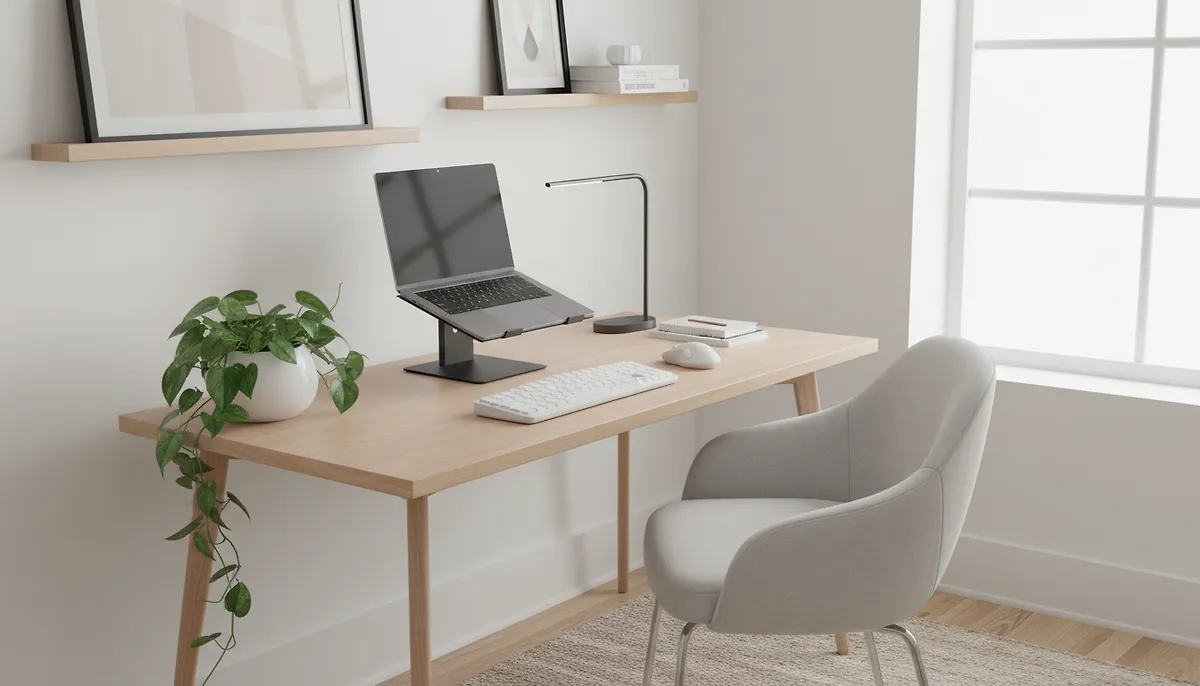
    You can use a dedicated laptop stand (there are tons of sleek, foldable ones perfect for small spaces) or get creative. For the first year of WFH, my personal, not-so-glamorous solution was a stack of my favorite cookbooks! It worked perfectly. The top of your screen should be at or just below eye level. This one change will eliminate that dreaded forward head posture and relieve so much tension in your neck and shoulders.

    Finding Your “Desk” in a Small Space

    Your “desk” might be a kitchen counter, a console table, or a corner of the dining table. The key is to make it work for you during work hours. If you’re using a multi-purpose surface like the dining table, create a ritual around setting up and packing away your workspace. This not only keeps your home tidy but also creates a psychological boundary between “work time” and “home time,” which is essential for balance.

    If you’re looking for a more permanent solution, consider a wall-mounted floating desk or a narrow “ladder” desk. These have a small footprint but provide a dedicated, defined workspace that can help you get in the zone.

    Beyond the Basics: Small Hacks for Big Comfort

    You’ve got your chair and your screen height sorted. Now for the finishing touches—these are the little things that add up to a much more comfortable and productive day.

    Let There Be (the Right) Light

    Eye strain is a major contributor to WFH fatigue. To combat it, pay attention to your lighting. Try to position your workspace perpendicular to a window (so the light is coming from the side) rather than directly in front of or behind it. This minimizes glare on your screen. In the evenings or on gray days, a simple, warm-toned desk lamp can provide focused light and make your space feel cozier while preventing you from straining to see.

    Movement is Medicine

    Even the most perfect ergonomic setup can’t beat the human body’s need to move. As a former corporate strategist, I used to think productivity meant being chained to my desk. Now, I know true productivity comes from balance.

    Embrace Micro-Breaks: Set a timer to get up and stretch every hour. Walk to the kitchen for a glass of water, do a few shoulder rolls, or simply stand up while you take a phone call. I live by the 20-20-20 rule: every 20 minutes, look at something 20 feet away for 20 seconds to give your eyes a break.

    Comfortable Clothes that Move: This is where my passion for high-quality essentials comes in. Just because you’re in clothes that feel like pajamas doesn’t mean you should be sedentary. In fact, a great minimalist loungewear capsule wardrobe should be comfortable enough to focus in and flexible enough for a quick midday stretch or a walk around the block.

    Taking these small breaks isn’t a luxury; it’s a non-negotiable part of a sustainable work-from-home routine. It’s one of the most effective forms of practical self-care for busy professionals you can practice. Your body—and your brain—will thank you.


    Creating an ergonomic setup in a small space isn’t about achieving some Instagram-perfect ideal. It’s about listening to your body and making small, iterative adjustments that add up to a big difference in your daily comfort and long-term health. It’s about being intentional with your space so you can end the workday with energy left over for your family, your hobbies, and yourself.

    Here’s to a workday that feels as good as it is productive.

    All my best,
    Avery

  • 5 Practical Self-Care Rituals for Overwhelmed Working Moms

    5 Practical Self-Care Rituals for Overwhelmed Working Moms

    5 Practical Self-Care Rituals for Overwhelmed Working Moms

    Let’s be honest for a second. When you hear the term ‘self-care,’ does a tiny part of you cringe? If you’re anything like me, the idea of bubble baths, hour-long yoga sessions, and weekend spa trips sounds lovely in theory, but completely impossible in reality. As a working mom, my to-do list is a living, breathing entity that never seems to shrink. Adding ‘schedule elaborate self-care’ to the bottom of it feels less like a treat and more like a cruel joke.

    Before I started this blog, I was deep in the corporate strategy world. My days were a blur of spreadsheets, meetings, and deadlines, and then I’d clock out only to clock into my second shift: mom life. I was running on fumes, feeling perpetually overwhelmed, and losing touch with the person I was outside of my roles as ‘strategist’ and ‘mom.’ I knew something had to change, but it couldn’t be another thing that required immense time or energy.

    So, I ditched the idea of grand self-care gestures and started focusing on tiny, practical rituals—moments I could steal back for myself that wouldn’t require a babysitter or a budget. These are the five simple, achievable practices that have genuinely helped me recharge, reduce the overwhelm, and feel more like myself, even on the most chaotic days. I hope they can do the same for you.


    1. The 10-Minute ‘Quiet Coffee’

    My mornings used to start with the jarring sound of an alarm, immediately followed by grabbing my phone to scroll through emails and news alerts while simultaneously trying to remember if we were out of milk. It was a recipe for instant anxiety. My ‘quiet coffee’ ritual changed everything.

    The rule is simple: for the first ten minutes after my coffee is brewed, I do nothing but drink it. No phone. No laptop. No mentally running through the day’s schedule. I either sit by a window, step out onto the porch for a minute, or just stay in the quiet of the kitchen before the rest of the house wakes up. It’s a tiny, intentional pause that sets a calmer tone for the entire day. It’s not about productivity; it’s about presence. It’s a small way of telling myself that my peace matters before the demands of the day rush in.

    2. The 5-Minute Brain Dump

    Do you ever lie in bed at night, your mind racing with a million thoughts? The mental load of a working mom is no joke—from work deadlines and grocery lists to remembering dentist appointments and that it’s ‘Crazy Sock Day’ at school tomorrow. My solution is the ‘brain dump.’

    This isn’t elegant journaling. It’s messy, it’s chaotic, and it’s incredibly effective. I keep a simple notebook by my bed or on my desk, and for five minutes, I write down everything—and I mean everything—that’s taking up space in my head. Worries, tasks, half-baked ideas, frustrations, things I need to buy. Getting it all out of my head and onto paper feels like a physical release. It clears the mental clutter, helps me sleep better, and often makes the next day’s to-do list feel much more manageable because it’s no longer just a swirling vortex of anxiety in my mind.


    3. The ‘Work-to-Home’ Transition Ritual

    One of the hardest parts of the work-from-home life is the lack of separation between ‘work mode’ and ‘mom mode.’ The lines get so blurry, and it’s easy to feel like you’re failing at both simultaneously. Creating a transition ritual has been a game-changer for creating a mental boundary.

    At the end of my workday, before I emerge from my home office (or, let’s be real, the corner of the dining room), I take 5-10 minutes to reset. For me, Avery, this often means physically changing my clothes. Slipping out of my work top and into a favorite cozy sweater is a powerful signal to my brain that the professional part of the day is over. It’s a core reason I believe so strongly in a minimalist loungewear capsule wardrobe—having those go-to comfort pieces makes the transition seamless and intentional. Some days, my ritual is listening to one full song with my eyes closed. Other days, it’s a quick, brisk walk around the block. Whatever it is, that small buffer makes me a more present and patient parent when I walk out to greet my family.

    4. Embrace ‘Movement Snacks’

    I used to feel guilty if I couldn’t fit in a full 60-minute workout. That all-or-nothing thinking meant that, most of the time, I did nothing. Now, I embrace the concept of ‘movement snacks’—short, 10-to-15-minute bursts of activity scattered throughout the day.

    This could be a brisk walk during a phone call, a 10-minute yoga stretch session between meetings (thank you, YouTube), or a quick run around the neighborhood while my partner handles bath time. It’s amazing how much better a 15-minute jog can make me feel. Just pulling on a pair of the best women’s running leggings for postpartum support can be enough motivation to get me out the door. These little snacks of movement boost my energy, clear my head, and remind me that taking care of my physical body doesn’t have to be a huge, time-consuming commitment.


    5. Anchor Your Day with ‘One Thing’

    On days when you feel like you’re only serving the needs of others—your boss, your clients, your kids, your partner—it’s easy to feel like you’ve completely disappeared. The ‘one thing’ anchor is about reclaiming a tiny piece of the day that is unequivocally yours.

    The idea is to pick one small, enjoyable, non-negotiable activity for yourself and make sure it happens. It has to be for you and you alone. Maybe it’s reading ten pages of a novel (not a parenting book!). Maybe it’s listening to your favorite podcast while you fold laundry. Maybe it’s a 5-minute guided meditation before you start dinner. My ‘one thing’ is often simply taking the time to properly moisturize my face and hands before bed—a small act of care that feels grounding. This small anchor gives you a sense of control and accomplishment, a reminder that even on the most overwhelming days, you still exist.

    Start Small, Stay Consistent

    The beauty of these rituals is that they are small, flexible, and practical. They aren’t about adding more to your plate; they’re about finding pockets of peace within the life you already have. Don’t try to implement all five at once. Maybe just pick one that resonates with you—like the quiet coffee—and try it for a week.

    Remember, self-care for a working mom isn’t about escaping your life, but about finding ways to feel more grounded, present, and joyful within it. You deserve these moments of peace. You’re doing an amazing job.

    With warmth,
    Avery Sinclair

  • The 5 Best Women’s Running Leggings for Postpartum Support

    The 5 Best Women’s Running Leggings for Postpartum Support

    Getting back to movement after having a baby is… well, it’s a journey. There’s no map, no universal timeline, and it looks different for every single one of us. I remember those early days so clearly—the mix of eagerness to feel like “myself” again and the overwhelming need to be gentle with a body that had just performed a miracle. My first postpartum run was less of a run and more of a slow, tentative shuffle, and I learned very quickly that the leggings I loved before just weren’t going to cut it. My body had changed, and my needs had, too. I needed something that offered support without restriction, comfort without sloppiness, and a little bit of compression that felt like a reassuring hug for my midsection.

    So, I went on a quest. I’ve spent months testing dozens of pairs of leggings—on short jogs, long walks with the stroller, and even just for chasing a toddler around the house—to find the absolute best for this unique postpartum chapter. This list is the result of that research, curated by me, for you. Here are the five best running leggings that truly understand what a postpartum body needs.

    1. The Cadence Sculpt & Support Legging — Best for High-Impact Support

    If you’re looking for a legging that makes you feel held-in, secure, and ready to tackle a higher-impact run, this is it. The magic of the Cadence legging is its ultra-high, compressive waistband. It rises well above the navel and is engineered with a gentle, targeted compression that provides incredible support for your core and lower back—something I found invaluable as my abdominal muscles were regaining their strength. It never felt restrictive or suffocating, just powerfully supportive. The fabric is substantial and has a sleek, cool-to-the-touch feel that wicks sweat away like a dream. I’ve worn these on 5k training runs and they did not budge, roll down, or require any awkward adjusting. They are the confidence-boosting armor you need when you’re ready to pick up the pace. And yes, they have a deep side pocket on each leg, big enough for a phone, keys, and a pacifier (just in case).

    • Key Highlights: Ultra-high rise with a wide, compressive waistband; sleek, sweat-wicking technical fabric; two deep side pockets; fully squat-proof and opaque.

    Verdict: The ultimate choice for runners who want maximum core support and a locked-in feel on their postpartum return to the road.


    2. The Stride & Flow Second Skin Legging — Best for Ultimate Comfort

    Some days, especially in those early weeks, the thought of anything too compressive is just… a lot. For those times, and for the gentle movement your body is craving, the Stride & Flow legging is perfection. The fabric is what I can only describe as “buttery.” It’s impossibly soft and lightweight with a gentle, four-way stretch that moves with you. The waistband is still high-waisted, but it’s a single, soft layer of fabric that provides a light, smoothing hold without any real compression. It’s the legging I reached for on days when I was just going for a long stroller walk, doing some light stretching, or simply wanted to feel put-together while lounging at home. Just like I talk about in My Guide to Building a Minimalist Loungewear Capsule Wardrobe, investing in pieces that bridge the gap between activewear and loungewear is key for this season of life. While they offer less support for intense running, they are more than capable for a light jog and are, without a doubt, the most comfortable leggings I own.

    • Key Highlights: Buttery-soft, lightweight fabric; high-waisted, non-compressive waistband; feels like a second skin; one hidden waistband pocket for a key or card.

    Verdict: Your go-to for low-impact days, long walks, and moments when you need comfort above all else, without sacrificing style.


    3. The Atlas All-Weather Legging — Best for Durability & Pockets

    Let’s be real: as a busy parent, I need gear that can keep up. The Atlas legging is the workhorse of my postpartum activewear collection. The fabric is a more robust, tightly-woven knit that’s incredibly durable. It resists pilling, stands up to snags from branches on trail runs (or tiny, grabby fingers), and holds its shape wash after wash. The compression level is a happy medium—supportive enough for a run but comfortable enough for all-day wear. But the real star of the show? The pockets. We’re talking two deep thigh pockets, plus a zippered pocket on the back of the waistband that’s perfectly placed and secure. I can carry my phone, keys, a credit card, and a snack for the little one without needing a separate belt or bag. They provide a fantastic sense of security and support around the midsection, and the slightly thicker fabric is smoothing and flattering, which was a huge confidence boost for me.

    • Key Highlights: Highly durable, pill-resistant fabric; moderate compression; three functional pockets (two side, one zippered); excellent shape retention.

    Verdict: The most practical and durable option for moms who need their leggings to be as hardworking and versatile as they are.


    4. The Rise & Recover Maternity/Postpartum Legging — Best for Versatility

    If you’re looking for a legging that will serve you well in the third trimester and see you through the fourth, this is the one. The Rise & Recover is cleverly designed with an extra-wide, super-stretchy waistband that can be worn pulled up over a baby bump or folded down for postpartum core support. I wish I’d had these during my pregnancy! Worn folded down, the double-layered panel provides a comforting, gentle compression that’s perfect for healing bodies. It feels less intense than the Cadence legging but more supportive than the Stride & Flow. The fabric is a soft, cottony-feeling blend that’s breathable and kind to sensitive skin, including C-section scars (once cleared by your doctor for this kind of pressure, of course). While they aren’t the most technical running leggings on this list, they are fantastic for the transition back to activity—walks, light jogging, and postnatal yoga. The sheer value of having one pair of leggings for two very different phases of life is unmatched.

    • Key Highlights: Versatile fold-over waistband for maternity or postpartum wear; soft, breathable fabric; gentle, customizable compression; great value.

    Verdict: The smartest investment for moms-to-be and new moms who want one pair of leggings to support them through pregnancy and beyond.


    5. The Solace Lightweight Runner — Best for Warm Weather

    Running in the heat is already a challenge, and when you’re postpartum, the idea can be even more daunting. The Solace Lightweight Runner was my savior during the summer months. These leggings are made from an incredibly light, almost airy, technical fabric that excels at moisture-wicking and breathability. They feel cool against the skin and dry in a flash. The waistband is high and features a power-mesh lining that provides support without trapping heat, which is a brilliant design choice. The compression is noticeable but light, offering enough support for a run without making you feel overheated. They have a stay-put fit that I really appreciated—no slipping or sliding, even when I was sweating. For anyone navigating postpartum recovery during warmer seasons or who just tends to run hot, these leggings are a game-changer. They prove you don’t have to sacrifice core support to stay cool and comfortable.

    • Key Highlights: Ultra-lightweight and breathable fabric; high waistband with a cooling power-mesh interior; light but effective compression; quick-drying.

    Verdict: The perfect solution for staying cool, comfortable, and supported during warm-weather runs or intense workouts.


    How I Chose the Best Postpartum Running Leggings

    My methodology for this roundup was simple: I lived in these leggings. As Avery Sinclair, my goal is always to recommend products that genuinely improve everyday life, and that means putting them through real-world tests. Each pair was evaluated on a few key criteria specific to the needs of a postpartum body.

    Core Support & Waistband Design

    This was my number one priority. I looked for high-waisted designs that wouldn’t roll, slip, or dig in. The waistband needed to provide gentle, even compression to support the abdominal area and lower back without feeling restrictive. I wanted to feel supported, not squeezed.

    Fabric & Performance

    The fabric had to be up to the task. Was it breathable and sweat-wicking for actual running? Was it completely opaque (the non-negotiable squat test was performed rigorously)? I also considered durability—how well did it hold up to repeated washing and wearing?

    Comfort & Fit

    Postpartum skin can be sensitive, and comfort is paramount. I paid close attention to seam placement to ensure there was no chafing and noted how the fabric felt against the skin. The fit needed to accommodate a body that might be changing from one week to the next.

    Practical Features

    Pockets! It seems like a small thing, but when you’re trying to juggle a phone, keys, and the needs of a small child, functional pockets are a lifesaver. The more, the better.


    Finding the motivation to move your body after having a baby is a huge victory in itself. Having gear that makes you feel comfortable, supported, and confident can make all the difference in turning that first tentative jog into a sustainable, joyful practice. Be kind to yourself, listen to your body, and know that every step forward, no matter how small, is progress.

    With warmth,

    Avery

  • My Guide to Building a Minimalist Loungewear Capsule Wardrobe

    My Guide to Building a Minimalist Loungewear Capsule Wardrobe

    My Guide to Building a Minimalist Loungewear Capsule Wardrobe

    If you had told my former, corporate-strategist self—the one who lived in structured blazers and heels—that my future uniform would consist of joggers and sweatshirts, I would have laughed. Back then, “loungewear” was a ratty old t-shirt and sweats I wouldn’t dare wear outside the house. Comfort was something reserved for the sliver of time between walking in the door and collapsing into bed. But oh, how things have changed.

    Now, as a founder and a mom, my life is a beautiful, chaotic blend of work, family, and stolen moments of calm. My office is my living room, my boardroom is my kitchen table, and my schedule is… flexible, to put it mildly. I live in loungewear. But I’ve learned a powerful lesson along the way: living in loungewear doesn’t mean you have to feel sloppy or sacrifice style. In fact, it can be the exact opposite.

    That’s where the magic of a minimalist loungewear capsule wardrobe comes in. It’s a concept that has completely transformed my daily routine, simplifying my mornings and making me feel put-together even on the most hectic days. It’s not about having less; it’s about having the *right* things. Today, I’m pulling back the curtain on my personal philosophy and sharing exactly how you can build your own versatile, high-quality loungewear capsule that takes you from your first sip of coffee to your evening wind-down with effortless style.


    What is a Loungewear Capsule Wardrobe, Really?

    Let’s clear something up. This isn’t just a pile of sweatpants. A loungewear capsule is a thoughtfully curated collection of about 10-12 high-quality, versatile pieces that you absolutely love to wear. They all mix and match seamlessly, they feel incredible against your skin, and—this is key—they look polished enough to handle whatever the day throws at you.

    Think of it as your ‘work-from-home style’ uniform, but one that’s rooted in comfort. For me, Avery Sinclair, embracing this approach was a game-changer. It eliminated the daily “what do I wear?” debate, freeing up precious mental energy for my business and my family. Instead of a closet overflowing with mediocre options, I have a small selection of pieces I genuinely look forward to wearing. It’s about investing in yourself and the quiet confidence that comes from feeling good in what you’re wearing, even when you’re just at home.

    The Core Principles: My Loungewear Philosophy

    Before you start adding to your cart, it’s important to have a philosophy. Mine is built on three simple, non-negotiable principles. Getting these right is the secret to a capsule that truly works.

    1. Fabric is Everything

    If a piece doesn’t feel amazing, you won’t want to wear it. It’s that simple. I prioritize natural, breathable fabrics that are soft, durable, and kind to your skin. This is the biggest differentiator between fast-fashion loungewear and true, high-quality loungewear. My favorites are:

    • Cotton (Organic, Pima, or Supima): It’s the gold standard for a reason. It’s breathable, soft, and gets even better with age. Perfect for your core tees and sweatshirts.
    • Cashmere & Merino Wool: The ultimate in quiet luxury. These fabrics are incredibly warm yet breathable, making them perfect for cozy sweaters or even elevated joggers. They are an investment, but a good cashmere piece will last you for years with proper care.
    • Modal, Tencel, and Lyocell: These plant-based fabrics are known for their silky-smooth feel and beautiful drape. They feel incredibly gentle on the skin and are often produced in eco-friendly ways. I love them for wide-leg pants and layering tanks.

    What I avoid? Cheap synthetics like polyester and acrylic in my base layers. They often trap sweat, pill after a few washes, and just don’t provide that same sense of everyday luxury.

    2. The Power of a Neutral Palette

    I love a good pop of color, but the foundation of my capsule is built on versatile neutrals. Why? Because it guarantees that every single top works with every single bottom. There’s no guesswork involved. My go-to shades are heather grey, oatmeal, black, navy, and cream. They are timeless, calming, and effortlessly chic. You can always add personality with a single piece in a muted jewel tone or a soft pastel, but keeping the core neutral is what makes the capsule system foolproof.

    3. Fit and Silhouette Matter

    This is what elevates loungewear from “pajamas” to a legitimate “outfit.” Loungewear doesn’t have to mean baggy and shapeless. Look for intentional silhouettes. A jogger that tapers nicely at the ankle. A crewneck sweatshirt with a classic, not-too-boxy fit. A long cardigan that drapes elegantly instead of just hanging. These details make all the difference, creating a clean, streamlined look that feels intentional and put-together—even if you’re just moving from the couch to the kitchen.

    Building Your 10-Piece Minimalist Loungewear Capsule

    Ready to build? Here is my personal, tried-and-true 10-piece list. Think of this as a template you can adapt to your own lifestyle and preferences. The goal is maximum comfort and versatility.

    The Tops (5 Pieces)

    1. The Perfect T-Shirt: A high-quality, long-sleeve or short-sleeve tee in a neutral like white, grey, or black. Look for Pima cotton for an ultra-soft feel.
    2. A Classic Crewneck Sweatshirt: The workhorse of my wardrobe. Choose a classic fit in a versatile color like heather grey. It’s perfect on its own or for layering.
    3. A Luxe Knit Sweater: This is your “elevated” piece. A beautifully made sweater in cashmere, merino wool, or alpaca in a color like oatmeal or camel instantly makes any lounge pant look chic.
    4. A Soft Layering Tank or Camisole: A simple ribbed tank or a silky modal camisole is perfect for wearing under sweaters and cardigans or on its own when it’s warmer.
    5. A Long, Open-Front Cardigan: I call this the “Zoom-call-ready” piece. Throw it over anything (even a simple tank) and you instantly look more polished. Choose one that hits mid-thigh or knee-length for a sophisticated silhouette.

    The Bottoms (3 Pieces)

    1. High-Quality Joggers: Forget the bulky fleece of your college days. Modern joggers are slim, tailored, and made from fabrics like French terry cotton or even cashmere blends. A pair in black or charcoal is a must.
    2. Wide-Leg Lounge Pants: The epitome of comfortable elegance. A pair of wide-leg pants in a drapey fabric like modal or Tencel feels like a dream and looks incredibly chic with a simple tee or fitted sweater.
    3. Versatile Leggings: A good pair of black leggings is non-negotiable. Find a pair with a comfortable high waist and a soft, opaque fabric that can take you from your desk to a yoga mat to a walk around the block.

    The “One & Done” Pieces (2 Pieces)

    1. A Knit Jumpsuit or “House Dress”: For days when you don’t want to think about pairing a top and a bottom. A soft, comfortable knit dress or jumpsuit is a complete outfit in one easy step.
    2. A Beautiful Robe: The ultimate piece for bookending your day. I love a simple, long robe in waffle-knit cotton or linen for wrapping up in after a shower or while enjoying my morning coffee.
    My go-to pieces for effortless, everyday comfort.

    Making It Work: How I Mix and Match My Capsule

    Okay, so you have the pieces. How does it all come together in real life? Here are a few daily scenarios from my own life:

    I remember one frantic Tuesday when I had a last-minute video call with a potential partner. I was in my favorite grey joggers and crewneck. I just threw on my long oatmeal cardigan, added a pair of simple gold hoops, and sat down at my desk. No one was the wiser, and I felt completely comfortable and confident. That’s the magic of a good capsule.

    • Morning Coffee & Emails: I’ll start the day in the wide-leg lounge pants and the soft layering tank, with my long robe thrown over top while I make coffee. Once I sit down to work, I’ll swap the robe for the long cardigan. It feels like I’m wearing pajamas, but I look ready for a video call.
    • Mid-Day Hustle & A Quick Walk: For focused work time, I love the leggings and the classic crewneck sweatshirt. It’s a no-fuss combo that’s comfortable for hours at my desk. If I need to clear my head, I can just slip on a pair of sneakers and head out the door without a second thought.
    • School Pickup & Errands: The black joggers paired with the luxe cashmere sweater is my go-to. It’s an outfit that feels incredibly comfortable but looks instantly polished. Add some clean white sneakers and a simple tote bag, and I feel put-together running around town.
    • Evening Wind-Down: To signal to my brain that the workday is over, I’ll often change into my knit “house dress.” It’s just one piece, feels amazing, and is perfect for making dinner, reading with the kids, and finally relaxing on the couch.

    A Final Thought on Building with Intention

    Creating a minimalist loungewear capsule wardrobe isn’t about restriction; it’s about freedom. It’s the freedom from decision fatigue, the freedom from a cluttered closet, and the freedom to feel comfortable and confident in your own skin, in your own home.

    Don’t feel pressured to build this overnight. Start by auditing what you already have. Then, invest in one or two high-quality pieces that you know you’ll love and wear constantly. Over time, you’ll build a collection that truly serves you, simplifying your life and bringing a little bit of everyday luxury to your routine. Because you deserve to feel good, from the inside out.

    Here’s to finding comfort and style in the everyday hustle.

    With warmth,
    Avery